Concert review: Horizon Classical/ New Horizons
Concert review: Haydn Copland New Horizons
Horizon Classical
International Reformed Evangelical Church, Alexandria, Sydney, Thursday April 23rd, 2026
Reviewed by Victoria Watson
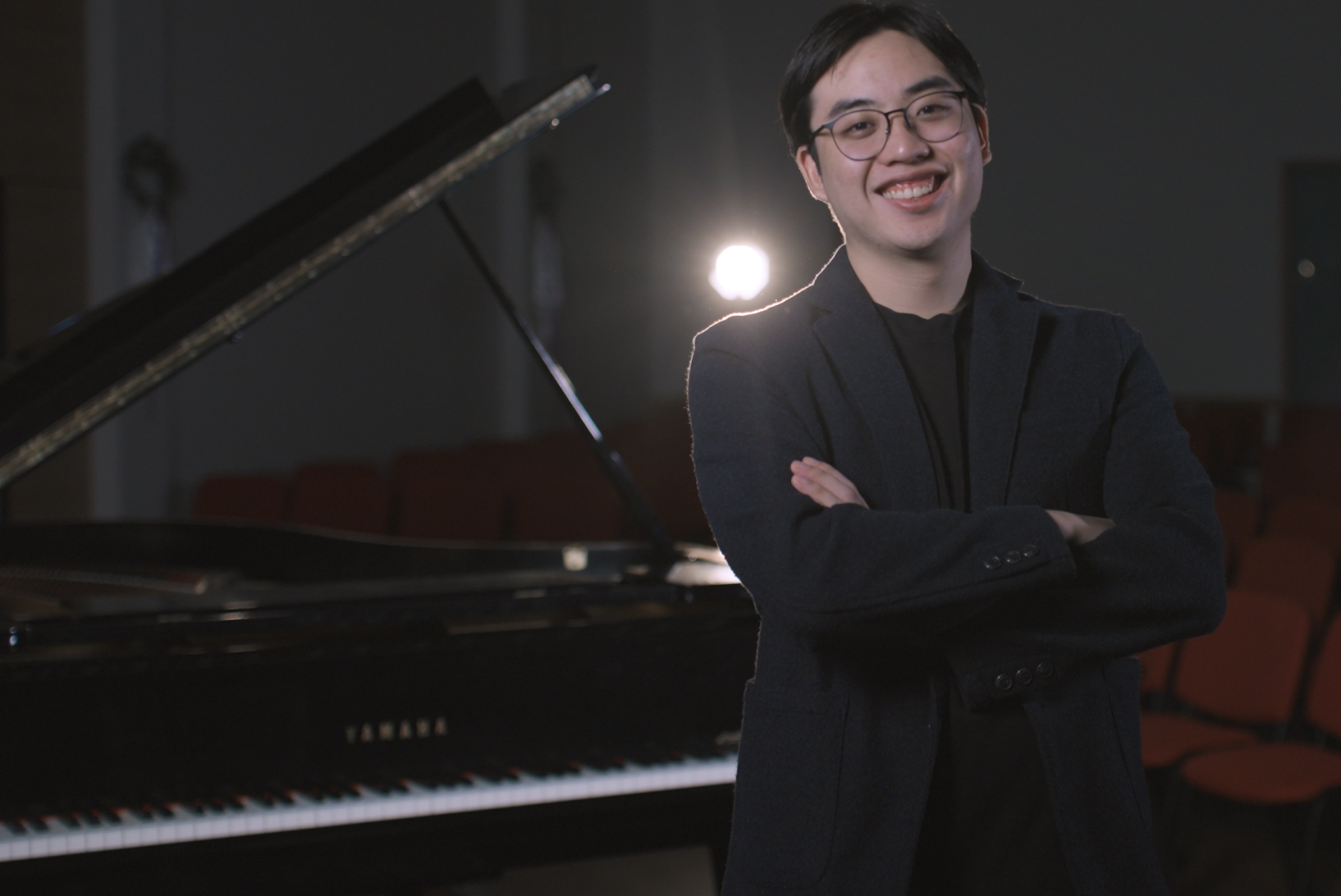
Horizon Classical was launched at this concert and featured its inaugural conducting fellow Hans Sangtoki. Hans is an Honours student at the Sydney Conservatorium of Music, University of Sydney, studying under Professor Benjamin Northey.
Sangtoki observed a need for emerging conductors to gain practical experience with high level orchestral players and formed Horizon in response. He is also committed to education and building new audiences of all ages and cultural backgrounds. This was clear from the video presentation which preceded the concert.
The venue allowed for the live performance to be simultaneously shown from different angles on two screens above the performers, enhancing audience engagement.
In the video, filmed by JSquared Studios, Sangtoki discusses the emotional and metaphorical potential of classical music and draws on parallels from nature and visual art. This led to a discussion highlighted with piano examples from the programmed two works by Josef Haydn and Aaron Copland. Linking them thematically were images related to morning in Haydn’s Symphony No. 6, known as “Le Matin”, and new horizons depicting the open spaces and hope explored in Copland’s Appalachian Spring. Since Leonard Bernstein revolutionised music education on film and with live orchestras, conductors have taken up the challenge of integrating this type of work with their artistic careers.
The sixteen strong chamber orchestra seamlessly launched into the Haydn symphony. Written as the first symphonic work for his new employer Prince Esterhazy in 1761, the youthful work features virtuosic solos for a number of instruments. The opening Adagio is thought to represent sunrise. Immediately, the ensemble impressed with an unanimity of purpose and expression. Sangtoki is both a disciplined leader and an expressive and emotional conduit allowing the orchestra to find much expression through dynamics and tempi. Anthony Sahagian beautifully delivered the playful flute solos.
The second movement, solely for strings, was expertly led by concertmaster and artistic mentor Susan Collins. Bringing a wealth of experience in many fine orchestras, Collins performed the rhapsodic violin obbligati with spontaneous joy balanced with elegant style. Sangtoki kept the orchestra well balanced in support. Cellist Charlotte He was also featured and matched the virtuosity of Collins in their dazzling duets. The wind players had their opportunities with some noteworthy playing from bassoonist Edmund Huang. The finale brought all forces together with some exciting, terraced dynamics and expressive key changes.
The second piece was originally a collaboration between Copland and choreographer Martha Graham to create a ballet in 1944. It was later arranged as an orchestral suite. Copland’s scoring was for thirteen musicians making it an excellent choice for Horizon Classical by adding a piano and clarinet to the Haydn ensemble and removing oboes and horns. The work’s name was inspired by poetry of Hart Crane in The Bridge (1930) which translates to themes of American rural life in Pennsylvania in the ballet narrative.
The music stands alone well without the theatrical context. Copland’s style while intended as “simple direct and approachable” nevertheless offers many complex rhythmic elements including rapidly changing metric groupings and syncopation. These make the work exhilarating and full of contrasts and expressive nuance. Sangtoki led the orchestra masterfully through all the musical challenges.
The clarinet solos of Daniel Thomas were especially fine, and his luminous tone complemented the string colours accompanying or in counterpoint. When the familiar Shaker melody Simple Gifts emerges, it is lyrical, played on the clarinet swelling to grandeur in the bass on cellos. It’s an emotional and intense climactic moment but not the end of the suite. The strings add mutes for the closing section and the music becomes deeply meditative, ever softer, and slower as if drifting off into a desert horizon. This piece perfectly bookended the sunrise imagery that opened the Haydn symphony and brought to a profound conclusion a most enjoyable performance.
Victoria Watson for SoundsLikeSydney©
A graduate of Melbourne university and VCA, Victoria appeared regularly as a soprano with the Victoria State Opera and has toured and served as artistic director of many chamber ensembles. She has performed with Sydney Symphony Orchestra and for ten years, was Artistic Director of a major opera education project with Opera Australia. Since 2015 she has moved into directing opera including Mozart’s Cosi Fan Tutte at the Independent theatre.
Victoria has lectured in voice at the major universities in Melbourne, and is currently a tutor at UNSW. Having taught at major Sydney secondary colleges, she now runs a busy private singing studio. She is a published author on opera and a popular freelance music and theatre lecturer and advocate for Australian artists around the world.