
Concert Review: Lux Aeterna And Hemispheres/The Gesualdo Six
Concert review: Lux Aeterna and Hemispheres
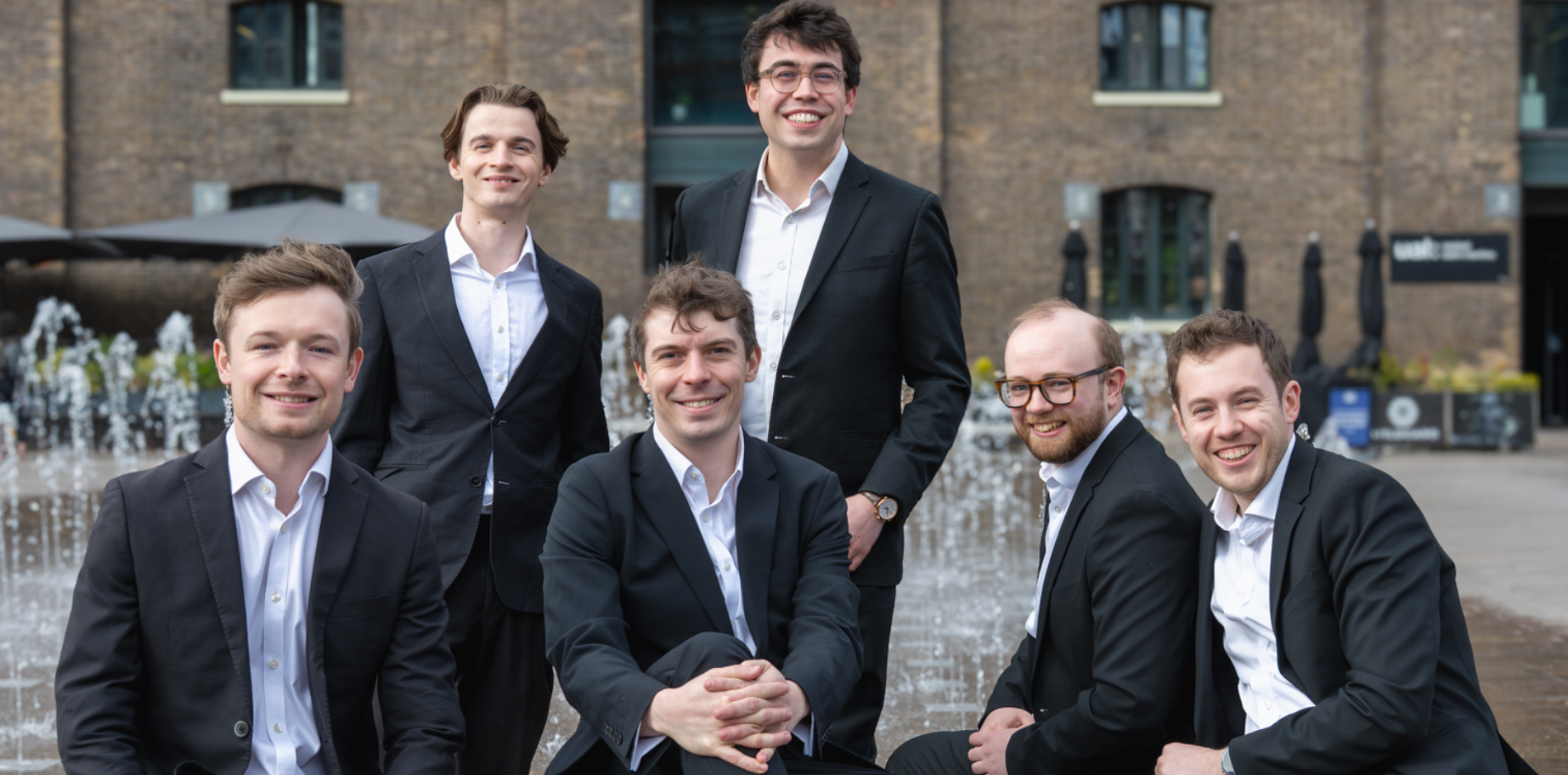
The Gesualdo Six with the Choir of St James’, King Street
St James’ Church, King Street
Saturday June 20th and Sunday June 21st 2026
Reviewer: Victoria Watson
The audiences for these two concerts were exceptionally privileged to hear the internationally renowned English vocal ensemble The Gesualdo Six directed by bass singer and composer Owain Park in an ideal venue at St James’, King Street. The classical architecture and subdued decoration of the church not only offered a perfect acoustic for a chamber group but also matched the beauty and meditative aspects of the theme of Saturday’s concert Lux Aeterna.
This Latin name is taken from the mass for the dead and it particularly references the motet by Cristobal de Morales (1500-1553) featured at the conclusion of the programme – May eternal light shine upon them Lord. Taking their inspiration further from the architecture, the six singers began the concert in a moment’s silence then sang the opening de Morales motet (this Renaissance composer’s works thus ‘bookending’ the programme), from the rear of the church, so the audience listened intently rather than watched the performance. The use of the space to vary the acoustic and visual experience was throughout, superbly judged and smoothly executed.
Immediately switching to a more contemporary sound palette the second item was Funeral Ikos by John Tavener (1944-2013). The text is framed by questions and responses and the three upper voice singers turned midway in the central aisle to face the three lower voices in a gesture of intellectual and spiritual confrontation and conversation. Each verse concludes with a joyful Alleluia and a rich play of dissonance and consonance exploiting the impeccable tonal accuracy of the ensemble.
This was a vocal ensemble who did not simply sing the pitches accurately. There was a studied awareness of the overtones of each voice and how it played into the harmonies when combined. The result was often astonishing, and an illusion was created of singularity of sound as if only one voice was creating the entire tapestry.
After works by Lassus, Tallis and Byrd, the full depth of director Owain Park’s gift was revealed with his composition It is finished, for four voices. Focussed on a brief biblical text from The Gospel of John, this reflective and melancholic work explored the exact moment of Christ’s death and the laying of his body in the tomb. Park’s intimate knowledge of the voices and skills he was writing for, informed every phrase. The work was poignant and moving, with great stillness and unanimity of purpose.
The other standout work was Plange Quasi Virgo by Carlo Gesualdo, after whom the ensemble is named. Considered to be the most challenging composer of madrigals or motets Gesualdo still shocks the ears with his bold word painting and even bolder harmonic and tonal shifts. The expressive range is almost cinematic in its inventiveness and The Gesualdo Six relished every twist and turn in the narrative. The final phrases are monumental as the text predicts the Day of Judgement, leaving the audience gasping at the sheer ambition and audacity of the music.
After over an hour of bliss, the thought of returning the following day for more contrasting repertoire was to be relished. The second concert did not disappoint.
Sunday’s offering Hemispheres combined The Gesualdo Six with the Choir of St James’, King Street. The opening six songs were performed by the English visitors, in a more conventional formation with the parts in the traditional order and forming a tight semicircle front and centre. After some polyphonic Byrd fireworks, the secular song bracket moved to a more homophonic treatment for lower voices alone of Vaughan Williams’ English folk song Bushes and Briars. The very Englishness of Vaughan Williams’ signature harmonies and folk inspirations made this a special moment, and it was performed from memory with great conviction. Joby Talbot’s intricate rhythms in The Wishing Tree excited the ear while the wind whistling of Alison Willis’ inventive The Wind’s Warning displayed extended techniques beyond older choral styles. The piece was the latest winner of a composition prize established by the ensemble.
The Choir of St James’, King Street, arrived in their striking red robes to join for the final four songs. The musical and intellectual challenges remained at the highest level with another Gesualdo motet O vos omnes combining both groups in mellifluous polyphony.
An absolute highlight of both concerts was the inclusion of a full version of Owain Park’s magnificent Phos hilaron. At 33, Park is a composer of great ability and an inspiring conductor of the choir. The groups divided with the remaining five English soloists singing from the rear as the choir sang from the nave. Often the choristers were humming complex harmonies as the opposing forces of the chamber group sang polytonally against them. The atmosphere created reflected the theme of mysticism and returned to the idea of light emerging from darkness. Individual voices had an opportunity to shine in the final eccentric, theatrical work by William Walton The Twelve. The piece enlisted all forces at hand including the church’s impressive new pipe organ.
In both concerts, the generous encore was the same madrigal, Abendlied by Josef Rheinberger. Sung one voice per part on Saturday, Sunday’s account was a delightful surprise with a key change and the entire St James’ Choir and Gesualdo Six members singing together. The sense of Hemispheres blending in harmony and Lux Aeterna (Eternal Light,) was glimpsed for a magic moment of perfect programming.
Huge kudos for St James’ Director of Music Thomas Wilson and all at St James’ for not only mounting these concerts featuring a world-renowned ensemble but matching their intelligence and energy in the combined works.
Victoria Watson for SoundsLikeSydney©
A graduate of Melbourne university and VCA, Victoria appeared regularly as a soprano with the Victoria State Opera and has toured and served as artistic director of many chamber ensembles. She has performed with Sydney Symphony Orchestra and for ten years, was artistic director of a major opera education project with Opera Australia. Since 2015 she has moved into directing opera including Mozart’s Cosi Fan Tutte at the Independent theatre.
Victoria has lectured in voice at the major universities in Melbourne, and is currently a tutor at UNSW. Having taught at major Sydney secondary colleges, she now runs a busy private singing studio. She is a published author on opera and a popular freelance music and theatre lecturer and advocate for Australian artists around the world.


