USyd’s First MOOC On Music Education Launches This Month.
The University of Sydney’s first MOOC centred on teaching music in the 21st century launches this month and urges music educators to rethink how technology is used to motivate school students to learn and make music.
It is the University’s first rollout of seven open online courses, The Place of Music in 21st Century Education has been developed by Dr James Humberstone, a composer and lecturer at the Sydney Conservatorium of Music.
Dr Humberstone believes that more music educators are needed in schools – one of the factors that led him to develop the University’s first MOOC.
“Data from an overwhelming majority of countries shows that there are no specialist music teachers in over half of the primary or elementary government schools, and only five to seven per cent of students learn music right through high school, even though the same data tells us they all love it!
“Of the school students who do pursue music, only a minority go onto tertiary training, and an even smaller number of graduates become school teachers who are almost always trained in classical music. We have created a self-perpetuating cycle in music education, which is limiting young students’ participation in music,” said Dr Humberstone.
The new MOOC, encourages music educators to consider how technology is used in education, reinvigorating the way music is taught at school. It is the first music course of its kind offered by Coursera, the world-leading, massive open online course provider.
The five module course is tailored to school and ensemble music educators or teachers, as well as people interested in a creativity-led education.
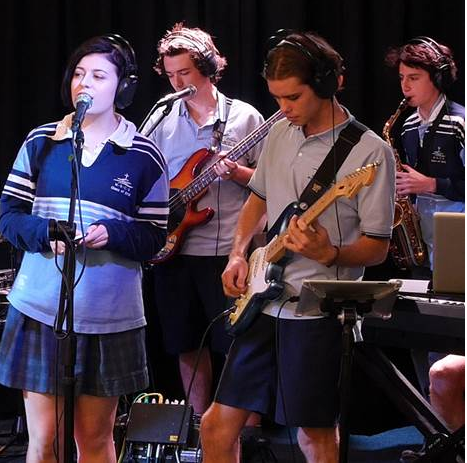
“It is designed to challenge old teaching practices and stimulate new thinking around how technology is used to inspire music teaching. Most children now lead technology-infused lives and are highly creative in the use of digital media. That said, we still have over a century of music pedagogy and practice that can’t be ignored. But for music teachers to inspire students today, they must be engaged with technology and tuned into the changing culture of our children,” said Dr Humberstone.
The MOOC explores different music teaching styles across three different primary and secondary schools in Sydney – from the technology-infused and technology-free education to the traditional Orff teaching method.
“The MOOC is primarily based on teaching in the school classroom, rather than instrumental, ensemble-based music teaching. It is broad, analytical and philosophical in nature, as it looks at current issues for music, the arts and education overall,” Dr Humberstone said.
The MOOC also moves beyond the classroom to compare notes with industry practitioners including electronic music producers, DJs and composers who have had both formal and informal training. Education futurist David Price OBE, conductor Richard Gill OAM, composer Professor Matthew Hindson AM, and DJ, producer and record label owner Francis Xavier are among the experts who share their career experiences, music-making style and pioneering approaches to inventive music.
Dr Humberstone believes that a music education in the 21st century is important brain training for prompting deeper learning in other subjects. “The role that music plays in the development of children’s brains, promoting resourcefulness, initiative and creative thinking, is well known. These skills are the key to abstract thinking, which is what studying music develops.”
“The global and digital society in which we now live means that the knowledge created in the world’s top universities can now be more readily and widely shared. MOOCs are a channel for engaging a global community of learners with our expertise and research across borders, countries and cultures, and encouraging a lifelong love of learning,” said Professor Philippa Pattison, Deputy Vice-Chancellor (Education), University of Sydney.
The University of Sydney MOOCs draw on expertise from across the University, including the Brain and Mind Research Institute, Charles Perkins Centre, the National Centre for Cultural Competence, the Faculty of Arts & Social Sciences, the Faculty of Health Sciences, the Faculty of Science, and the Sydney Conservatorium of Music.
Click here for more on The Place of Music in 21st Century Education.