CD Review: Beethoven Piano Trios/ Seraphim Trio
download

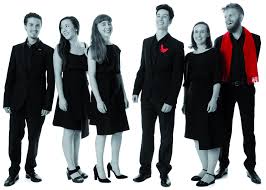
The Seraphim Trio: Anna Goldsworthy, piano/ Helen Ayers, violin/ Timothy Nankervis, cello

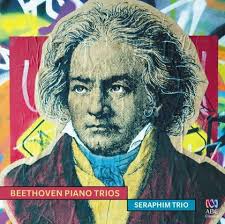
The Seraphim Trio’s new recording of three Beethoven piano trios is a spin-off from their 2015 Beethoven Immersion project when they performed all Beethoven’s piano trios across a wide variety of venues around Australia.  Throughout this recording they display the classic virtues of fine chamber music playing: blend, balance, tight ensemble and well-chosen tempi.  Their unanimity of style also adapts successfully to the changes required by Beethoven’s evolving compositional development.

The CD opens with the Trio in G major Op.1 no.1, modelled on the piano trios of Haydn and Mozart, but cast in four movements, which is one way in which the young Beethoven signals his intention to take his own path.  The playing is finely poised while still highlighting Beethoven’s characteristic changes of mood.  The slow movement opens with some delectable legato playing from both the violin and cello and exudes a feeling of contentment.  The playing in the scherzo conveys the delights of domestic music-making while the finale sets out at a sprightly tempo emphasising the young Beethoven’s sense of fun.

The second work on the CD is Beethoven’s mature Trio in D major, Op. 70 no.1, also known as the ‘ghost’.  From Beethoven’s middle period, the work is painted on a broader canvas and the Seraphim Trio adjust their approach accordingly, adopting a more assertive, fuller sound.  In the unearthly slow middle movement, which prompts the work’s nickname, the angst and inner turmoil are well brought out.

The final work is the Trio in B-flat Op. 11 nicknamed ‘Gassenhauer’.  It was originally written for clarinet, cello and piano but Beethoven adapted the clarinet part for violin, probably to increase sales for the work’s publication.  The violin version does not have the tonal variety of the original, but the Seraphim Trio nevertheless produce a winning interpretation with the sentimental atmosphere of the slow movement especially well brought out.  The subtitle ‘street song’ (Gassenhauer) refers to the set of colourful variations in the last movement which are based on an opera aria that was popular in Vienna at the time.  These provide a rollicking conclusion to the CD.

The recording was made in the Eugene Goossens Hall at the ABC’s Ultimo Centre.  The recording engineer, Virginia Reed, has captured an intimate chamber music acoustic, well-balanced and with an attractive bloom particularly for the lower notes of the piano.

The Seraphim Trio’s Beethoven Piano Trios CD is available on ABC Classics 481 1980.

Larry Turner for SoundsLikeSydney©


Larry Turner has been singing in choirs for many years – both in Sydney and London.  He is an avid attender of operas and concerts, with an emphasis on vocal music.  He particularly enjoys music from both the great a capella period and the baroque – especially the lesser-known works of Bach and Handel.  He has written programme notes for Sydney Philharmonia, the Intervarsity Choral Festival and the Sydneian Bach Choir and is currently part of a team researching the history of Sydney Philharmonia for its forthcoming centenary.


Similar Posts

  • Concert Review: Splendour And Mystery/Sydney Chamber Choir

    Splendour and Mystery/ Sydney Chamber Choir
    Verbrugghen Hall, Sydney Conservatorium of Music
    Australian Digital Concert Hall
    25 March, 2023
    In Splendour and Mystery, Sydney Chamber Choir under the direction of Sam Allchurch joined forces with Camerata Antica led by Matthew Manchester and organist Thomas Wilson in an adventurous anthology of music written for double choir. Specialising in the music of the 16th and 17th centuries, the founder of Camerata Antica, Matthew Manchester playing the fiendishly difficult cornetto, was joined by Michael Wyborn, William Kinmont and Paolo Franks playing the equally challenging alto, tenor and bass sackbutts respectively.
    Bookended with pieces by Giovanni Gabrieli with one of his refreshing Canzonas in the middle, the program also contained music by living Australasian composers Clare Maclean and Brooke Shelley, Gabrieli’s contemporary and student Heinrich Schütz and 20th century composers John Tavener and Frank Martin. Together these composers explore and exploit the potential of the double choir with its opportunities for super-rich harmonies, added melodic lines, imitation, choral interplay and variations in the positioning of the singers.
    The opening motet, Gabrieli’s Jubilate Deo omnis terra, C 65 was quite literally a musical shout for joy. A major part of this journey back in time to Renaissance Venice was the unique sound of Camerata Antica. Heralded by the instruments, the 10 lines of the choir sang an uplifting, lively and tightly dotted chorus, alternating with homophonic passages. Allchurch and his ensemble clearly delineated the rhythms, changing time signatures, hemiolas and other displaced accents which created the buoyancy of this celebratory piece.
    John Tavener’s brilliant A Hymn to the Mother of God transcends the mortal and looks to the cosmic powers of Mother Mary. Writing in the style of canon, with imitative lines that start in quick succession and not necessarily in harmony, Tavener creates a sense of ‘other-worldliness’ in this simple but awe-inducing piece in three-sections. It was a slow burn as the two choirs sang with shimmering lightness and a sense of spinning through space, creating vivid colours and  clusters of clashing chords with impressive control as the voices rose in range and dynamic to its full-bodied climax.
    The program moved imperceptibly to the German Magnificat by Heinrich Schütz, as the choirs were joined by organ and instruments. This was a relevant and important inclusion as Gabrieli himself taught Schütz in this multi-choral technique which Schütz then developed in his own style.
    Clare Maclean’s moving Christ the King was sublimely sung, opening in the manner of a plainchant by the female voices which peeled off into mirroring phrases by the other voices, ending in a reprise of the plainchant. Premiered by this choir in 1984, it is precisely opportunities like these which new composers need for their music to be heard and re-heard until it becomes recognizable to listeners and enters the DNA of the concert repertoire.
    The short and brilliant burst of Gabrieli’s Canzona seconda, C 187  from Camerata Antica showcased these rudimentary instruments in all their imperfect glory as the choir positioned itself for Frank’s only unaccompanied choral work, the demanding  Mass for double choir, considered to be one of the finest and most complex pieces of 20th century choral music. The choir did ample justice to this piece which incorporates the aesthetics of Renaissance music, French Impressionism, Schoenberg’s twelve-note system and J S Bach. The altos began the Kyrie with a freely-flowing, supplicating melody; the Gloria built step-wise to cluster chords; the Credo was a business-like affirmation of faith; the canon-styled Et Resurrexit was levity, hope and word-painting to perfection; the Sanctus introduced softer harmonies from the male voices. The mass, Version 1, ended with a powerful Benedictus. Fast forward to 1926 and Martin added the Agnus Dei, the crowning glory to this choral magnum opus. The mass culminated in a glorious unification of the choirs.
    Brooke Shelley’s Heavenly Father, composed in 2022, performed in the presence of the composer was premiered in November 2022, by the Sydney Chamber Choir. A lyrical and beautifully textured piece, it is very pleasing that it has quickly been programmed again. Like the slightly older piece by Maclean, it is critical that new pieces of merit such as these, are given regular and frequent hearings so that they may be heard widely and face the test of time.
    Finally, Gabrieli’s Magnificat a 14, C 79 brought together the full instrumental and vocal forces of the ensemble. Using the 16th century Venetian technique of cori spezzati (split choirs), the brighter sound of the female voices and cornetto took to the left gallery with the male voices and the thrilling grunt of the bass and other sackbutts in the right gallery with a mixed ensemble placed and organ placed centrally on stage.
    This was an intelligent and audacious program from Allchurch, performed with glorious sound by a choir secure in technique, pitch and musicianship.

  • CD review ‘Spheres’: Music meets metaphysics

    “The Heavenly Spheres make music for us,…….All things join in the dance!” Gustav Holst Having recently recorded Max Richter’s re-composition of Vivaldi’s Four Seasons for Deutsche Grammophon, violinist Daniel Hope looks to the elements yet again for inspiration in this recording called Spheres (DG 0289479 0571), which debuted at number 3 in the US BIllboard…

  • Concert Review: Australian Haydn Ensemble/Celeste Lazarenko

     Australian Haydn Ensemble with Celeste Lazarenko  Utzon Room, Sydney Opera House 26 September 2015 Erin Helyard, Director and Harpsichord/ Skye McIntosh, Artistic Director and Violin/ Matthew Greco, Violin/ James Eccles, Viola/Anthony Albrecht, Cello/Jacqueline Dossor, Double Bass/ Melissa Farrow, Flute.    Although formed only four years ago, the Sydney-based Australian Haydn Ensemble has established itself as a…

  • Review: Bittersweet Obsessions: Monteverdi And Bach/ Australian Brandenburg Orchestra

    Bittersweet Obsessions: Monteverdi and Bach Australian Brandenburg Orchestra City Recital Hall 25 October 2017 The Australian Brandenburg Orchestra’s Bittersweet Obsessions: Monteverdi and Bach is an engaging pastiche of early and baroque music, performed in a dramatised setting by thirteen members of the orchestra, led by concertmaster Shaun Lee-Chen. Joined by four vocal soloists – New…

Leave a Reply

Your email address will not be published. Required fields are marked *