CD Review: Nelson Friere Bach

Friere

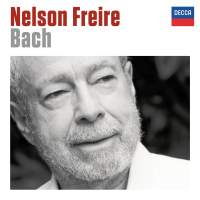
Brazilian pianist Nelson Friere has added to his extensive discography with an album of selected works by JS Bach called Nelson Friere Bach. (Decca Classics 4788449).

It is noteworthy because it is Friere’s first album dedicated solely to the music of Bach, it includes works written for the keyboard as well as transcriptions from other genres by important transcribers including Bach himself and the selections represent some significant landmarks in Bach’s catalogue of works.

From Bach’s keyboard repertoire, Friere performs the Partita no 4 in D major, BWV 828, said to contain “matured specimens of the most popular harpsichord genre of the time” (Oxford Dictionary of Music), and one of the longest of the Six Partitas; the Toccata in C minor, BWV 911, another of the longest and most improvisatory of the collection, the mighty Chromatic Fantasia and Fugue in D minor BWV 903 and the English Suite no 3 in G minor, BWV 808. It is not stated on what kind of piano Friere has recorded this album, but the colours he achieves in this repertoire are clear, bright and well articulated, vividly evoking the sounds of the harpsichord.

Transcriptions are an important facet of Bach’s music. He transcribed both his own compositions and those of others; as well, other musicians through the centuries were inspired transcribe his works. In homage to these derivatives, Friere has included the Adagio from Bach’s highly embellished transcription of his contemporary Alessandro Marcello’s (1673 – 1747) Concerto for Oboe and Strings which became Bach’s Concerto in D minor for harpsichord, BWV 974.  This is followed by works written for the organ the Prelude in G minor from BWV 535, transcribed by Ukrainian- American pianist and composer Alexander Siloti (1863 – 1945) and two more famous and highly respected re-inventions of Bach’s originals – Busoni’s treatment of the chorale Ich ruf zu dir, Herr Jesu Christ BWV 639 and Myra Hess’ Jesu, Joy of Man’s Desiring from Cantata No. 147; as well, chorales from Komm, Gott Schöpfer, heiliger Geist, BWV 667 and Nun komm, der Heiden Heiland, BWV 659.

In these transcriptions, chameleon like, Friere moves away from the style of the harpsichord and emulates the instruments for which the pieces were written – a legato worthy of the oboe and string orchestra and a richly sustained resonance that well evokes the majesty and rich resonance of the organ.

The CD liner has a wealth of information compiled by New York pianist, composer and writer Jed Distler. The CD was recorded in August 2015 at the Friedrich-Ebert-Halle in Harburg.

Nelson Friere Bach is an innovative exploration of Bach’s original and transcribed works, played by a performer who has a wealth of experience, great insight into elements of style, technique and versatility.

Shamistha de Soysa for SoundsLikeSydney©

 

Similar Posts

  • Opera Review: Das Rheingold/ Melbourne Opera/ Melbourne Digital Concert Hall/

    Das Rheingold, Richard Wagner Melbourne Opera/Melbourne Digital Concert Hall Livestream, Sunday 4 February 2021. Melbourne Opera’s recent presentation of Das Rheingold, broadcast on Melbourne Digital Concert Hall featured an outstanding team of cast and creatives, delivering an eloquent realisation of the first of Wagner’s quartet of operas that comprise The Ring of the Nibelung. This…

  • From Cadenzas to Riffs: Amy Dickson’s ‘Catch Me If You Can’

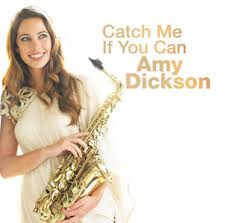
    Amy Dickson, the Sydney born saxophonist has released her 3rd solo CD Catch Me If You Can (ABC Classics 481 0118) a pleasurable demonstration of her prowess and the potential of this instrument. Playing the alto saxophone, she has recorded three complete and substantial works, Escapades by John Williams (b1932), Concerto for Saxophone by Michael Kamen (1948 – 2003) and…

  • Concert Review: Splendour And Mystery/Sydney Chamber Choir

    Splendour and Mystery/ Sydney Chamber Choir
    Verbrugghen Hall, Sydney Conservatorium of Music
    Australian Digital Concert Hall
    25 March, 2023
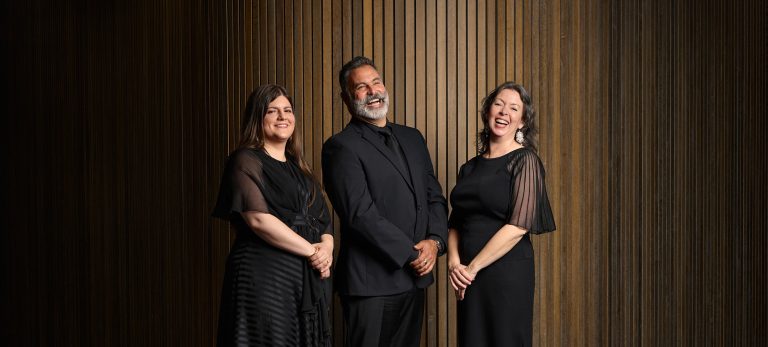
    In Splendour and Mystery, Sydney Chamber Choir under the direction of Sam Allchurch joined forces with Camerata Antica led by Matthew Manchester and organist Thomas Wilson in an adventurous anthology of music written for double choir. Specialising in the music of the 16th and 17th centuries, the founder of Camerata Antica, Matthew Manchester playing the fiendishly difficult cornetto, was joined by Michael Wyborn, William Kinmont and Paolo Franks playing the equally challenging alto, tenor and bass sackbutts respectively.
    Bookended with pieces by Giovanni Gabrieli with one of his refreshing Canzonas in the middle, the program also contained music by living Australasian composers Clare Maclean and Brooke Shelley, Gabrieli’s contemporary and student Heinrich Schütz and 20th century composers John Tavener and Frank Martin. Together these composers explore and exploit the potential of the double choir with its opportunities for super-rich harmonies, added melodic lines, imitation, choral interplay and variations in the positioning of the singers.
    The opening motet, Gabrieli’s Jubilate Deo omnis terra, C 65 was quite literally a musical shout for joy. A major part of this journey back in time to Renaissance Venice was the unique sound of Camerata Antica. Heralded by the instruments, the 10 lines of the choir sang an uplifting, lively and tightly dotted chorus, alternating with homophonic passages. Allchurch and his ensemble clearly delineated the rhythms, changing time signatures, hemiolas and other displaced accents which created the buoyancy of this celebratory piece.
    John Tavener’s brilliant A Hymn to the Mother of God transcends the mortal and looks to the cosmic powers of Mother Mary. Writing in the style of canon, with imitative lines that start in quick succession and not necessarily in harmony, Tavener creates a sense of ‘other-worldliness’ in this simple but awe-inducing piece in three-sections. It was a slow burn as the two choirs sang with shimmering lightness and a sense of spinning through space, creating vivid colours and  clusters of clashing chords with impressive control as the voices rose in range and dynamic to its full-bodied climax.
    The program moved imperceptibly to the German Magnificat by Heinrich Schütz, as the choirs were joined by organ and instruments. This was a relevant and important inclusion as Gabrieli himself taught Schütz in this multi-choral technique which Schütz then developed in his own style.
    Clare Maclean’s moving Christ the King was sublimely sung, opening in the manner of a plainchant by the female voices which peeled off into mirroring phrases by the other voices, ending in a reprise of the plainchant. Premiered by this choir in 1984, it is precisely opportunities like these which new composers need for their music to be heard and re-heard until it becomes recognizable to listeners and enters the DNA of the concert repertoire.
    The short and brilliant burst of Gabrieli’s Canzona seconda, C 187  from Camerata Antica showcased these rudimentary instruments in all their imperfect glory as the choir positioned itself for Frank’s only unaccompanied choral work, the demanding  Mass for double choir, considered to be one of the finest and most complex pieces of 20th century choral music. The choir did ample justice to this piece which incorporates the aesthetics of Renaissance music, French Impressionism, Schoenberg’s twelve-note system and J S Bach. The altos began the Kyrie with a freely-flowing, supplicating melody; the Gloria built step-wise to cluster chords; the Credo was a business-like affirmation of faith; the canon-styled Et Resurrexit was levity, hope and word-painting to perfection; the Sanctus introduced softer harmonies from the male voices. The mass, Version 1, ended with a powerful Benedictus. Fast forward to 1926 and Martin added the Agnus Dei, the crowning glory to this choral magnum opus. The mass culminated in a glorious unification of the choirs.
    Brooke Shelley’s Heavenly Father, composed in 2022, performed in the presence of the composer was premiered in November 2022, by the Sydney Chamber Choir. A lyrical and beautifully textured piece, it is very pleasing that it has quickly been programmed again. Like the slightly older piece by Maclean, it is critical that new pieces of merit such as these, are given regular and frequent hearings so that they may be heard widely and face the test of time.
    Finally, Gabrieli’s Magnificat a 14, C 79 brought together the full instrumental and vocal forces of the ensemble. Using the 16th century Venetian technique of cori spezzati (split choirs), the brighter sound of the female voices and cornetto took to the left gallery with the male voices and the thrilling grunt of the bass and other sackbutts in the right gallery with a mixed ensemble placed and organ placed centrally on stage.
    This was an intelligent and audacious program from Allchurch, performed with glorious sound by a choir secure in technique, pitch and musicianship.

Leave a Reply

Your email address will not be published. Required fields are marked *