Concert Review: Indie Ditties/ Hao

Indie Ditties/ Rob Hao

Utzon Room, Sydney Opera House

April 8, 2022

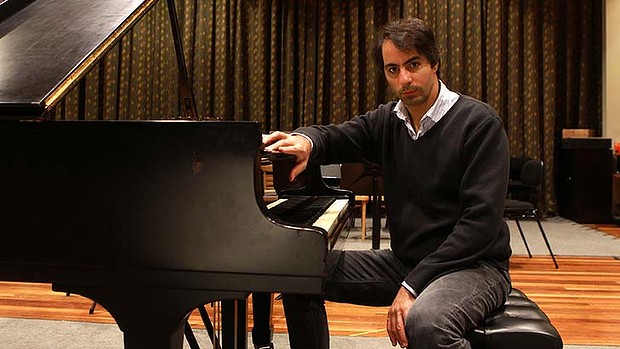
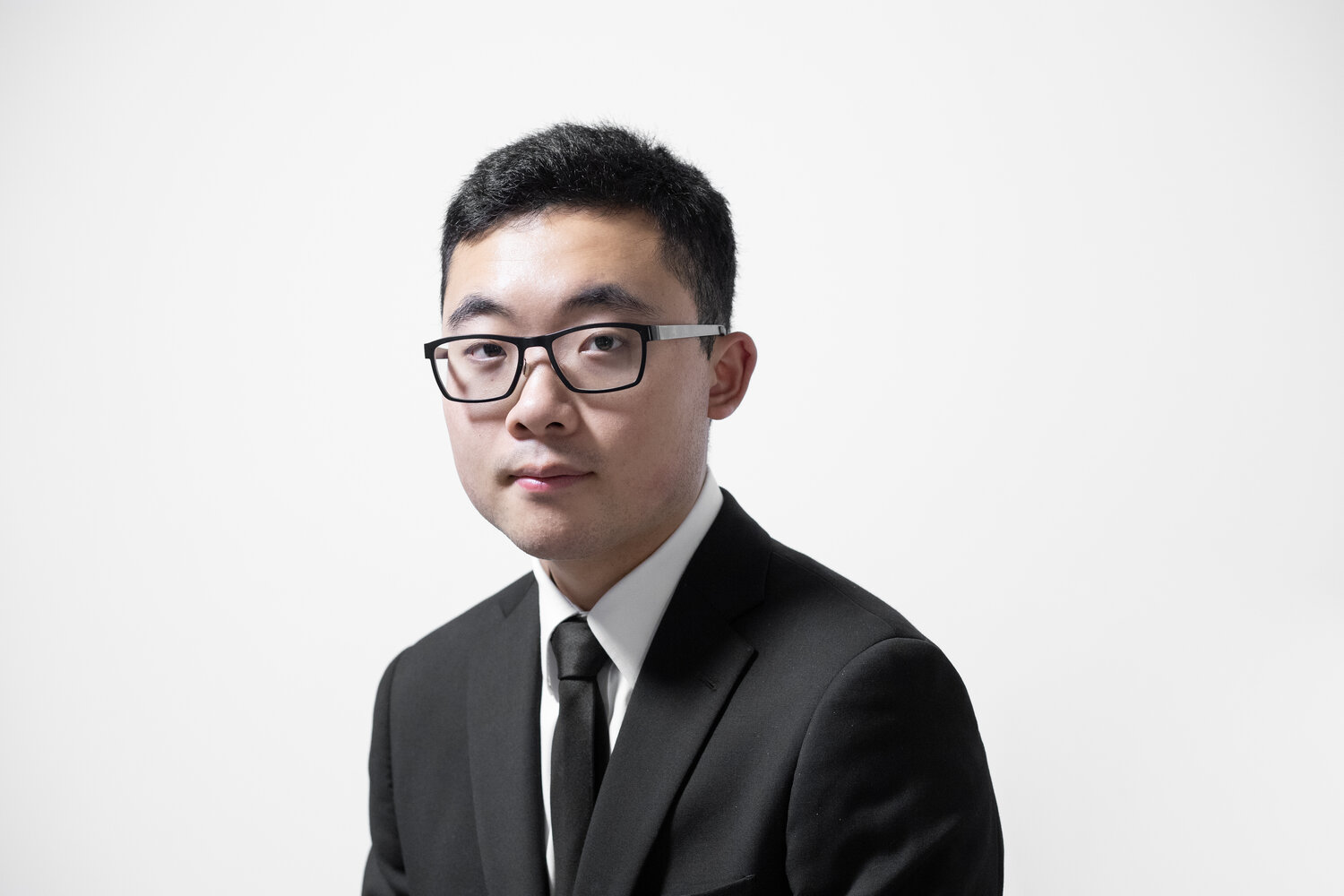
The Utzon Room of the Sydney Opera House was treated to a double first on Friday night, with the Australian debut of London-based pianist Rob Hao performing the Australian premiere of Nicholas Vines’ Indie Ditties. This work, subtitled “Twelve Scapes for Piano”, is a cycle of movements which are essentially preludes, in the manner of Debussy or Chopin. The subject matter comprises various views on hipster subculture, sometimes affectionate, sometimes mocking, often somewhere in between. Technically, it makes effective use of the full range of the piano, and while the harmonic idiom may be confronting, a similar structural thread through all of the “Scapes” makes this music challenging yet accessible, rather than simply unapproachable.

Vines’ music is well crafted, idiomatically written and, perhaps most importantly, willing to push the boundaries of what is acceptable by speaking in languages the audience nonetheless understands. It is music however which still needs a skilled and sensitive hand; the mimicry of a motorcycle engine which opens the cycle (I, “Grease on the Handlebars”), heralds forty-five minutes of wide-ranging colours, moods and techniques. Hao powered through the virtuosic “Scapes”, whether evoking a desire for plain-glass spectacles (IV, “20/20 Frames”), a joyful bicycle ride (VII, “Crucifixie”) or an obsession with tattoos (XII, “Too Much Ink”). He was equally at home in crafting peaceful moments, sometimes of absolute stillness, as in the vaguely religious self-pity of IX, “… and the freak shall inherit the earth …” But perhaps most impressive were the moments when Vines pushed the pianist to less conventional extremes, as in the juggling of nine different tempi over the three-and-a-half-minute course of X, “Bob Springmones Holed My Pink Stones”. Throughout, Hao rose to every challenge spectacularly, acquitting the cycle with panache and tenderness where appropriate; he made an excellent first case for Vines’ Indie Ditties, which should by most metrics be destined for a well-deserved place in the Australian piano canon.

After the interval, Hao signalled a change of pace with Chopin’s Op. 63 Mazurkas, followed by two contrasting transcriptions of songs by Franz Schubert. The incessant rhythms of “Erstarrung” from Winterreise, and the chordal embellishments to the slow-flowering melody of Du bist die Ruh. In each case, Hao performed Franz Liszt’s transcriptions, which at times are downright awkward pianistically, with ease and grace. This led onto the core of the half, in the form of three Impromptus: Chopin’s Op. 51 (in G-flat), and Schubert’s Op. 90 No. 3 (in G-flat) and Op. 142 No. 2 (in A-flat). While each of these was played with consummate Romantic skill and sensitivity, the latter two were probably the highlights. The sextuplet quavers of Op. 90 No. 3 were imbued with a restlessness which gave the cantilena gentle pushes towards cadence points and finally the last bar, while the chorale-like nature of Op. 142 No. 2’s outer sections was contrasted with the unerring clarity of the central section’s triplet quavers. A stirring and impetuous Chopin Ballade No. 1 concluded the concert, and brought the near-full Utzon Room to a standing ovation.

Stephen McCarthy for SoundsLikeSydney©

Stephen McCarthy is an emerging writer and composer from Sydney, Australia. His writings on music include a series of essays on various operas; the first of these, “A Redefinition of Opera? Lay Thoughts on Seeing Philip Glass’ Akhnaten”, was published in the UNSWeetened Literary Journal. He also won the Nan Manefield Young Writers’ Award and the Senior Poetry Prize in the Mosman Youth Awards in Literature for his poem, “On the Ellipsis”.

As a composer, his works include: for solo piano, an Improvisation, a Sonatina and a ballet after Thomas Hardy’s novel Far From the Madding Crowd; and a setting of Robert Bridges’ “Noel: Christmas Eve, 1913” for SSATBB choir.
Similar Posts

  • Concert Review: English Baroque/ Australian Brandenburg Orchestra/ Circa/ Jane Sheldon

    English Baroque Australian Brandenburg Orchestra, Circa, Jane Sheldon, Lauren Stephenson City Recital Hall, Sydney 8 May, 2019 A collaboration with Circa must seem like taking a friend to a party only to find that they steal all your attention. The Australian Brandenburg Orchestra’s third collaboration with the Brisbane based contemporary human circus company Circa, is…

  • Concert Review: Splendour And Mystery/Sydney Chamber Choir

    Splendour and Mystery/ Sydney Chamber Choir
    Verbrugghen Hall, Sydney Conservatorium of Music
    Australian Digital Concert Hall
    25 March, 2023
    In Splendour and Mystery, Sydney Chamber Choir under the direction of Sam Allchurch joined forces with Camerata Antica led by Matthew Manchester and organist Thomas Wilson in an adventurous anthology of music written for double choir. Specialising in the music of the 16th and 17th centuries, the founder of Camerata Antica, Matthew Manchester playing the fiendishly difficult cornetto, was joined by Michael Wyborn, William Kinmont and Paolo Franks playing the equally challenging alto, tenor and bass sackbutts respectively.
    Bookended with pieces by Giovanni Gabrieli with one of his refreshing Canzonas in the middle, the program also contained music by living Australasian composers Clare Maclean and Brooke Shelley, Gabrieli’s contemporary and student Heinrich Schütz and 20th century composers John Tavener and Frank Martin. Together these composers explore and exploit the potential of the double choir with its opportunities for super-rich harmonies, added melodic lines, imitation, choral interplay and variations in the positioning of the singers.
    The opening motet, Gabrieli’s Jubilate Deo omnis terra, C 65 was quite literally a musical shout for joy. A major part of this journey back in time to Renaissance Venice was the unique sound of Camerata Antica. Heralded by the instruments, the 10 lines of the choir sang an uplifting, lively and tightly dotted chorus, alternating with homophonic passages. Allchurch and his ensemble clearly delineated the rhythms, changing time signatures, hemiolas and other displaced accents which created the buoyancy of this celebratory piece.
    John Tavener’s brilliant A Hymn to the Mother of God transcends the mortal and looks to the cosmic powers of Mother Mary. Writing in the style of canon, with imitative lines that start in quick succession and not necessarily in harmony, Tavener creates a sense of ‘other-worldliness’ in this simple but awe-inducing piece in three-sections. It was a slow burn as the two choirs sang with shimmering lightness and a sense of spinning through space, creating vivid colours and  clusters of clashing chords with impressive control as the voices rose in range and dynamic to its full-bodied climax.
    The program moved imperceptibly to the German Magnificat by Heinrich Schütz, as the choirs were joined by organ and instruments. This was a relevant and important inclusion as Gabrieli himself taught Schütz in this multi-choral technique which Schütz then developed in his own style.
    Clare Maclean’s moving Christ the King was sublimely sung, opening in the manner of a plainchant by the female voices which peeled off into mirroring phrases by the other voices, ending in a reprise of the plainchant. Premiered by this choir in 1984, it is precisely opportunities like these which new composers need for their music to be heard and re-heard until it becomes recognizable to listeners and enters the DNA of the concert repertoire.
    The short and brilliant burst of Gabrieli’s Canzona seconda, C 187  from Camerata Antica showcased these rudimentary instruments in all their imperfect glory as the choir positioned itself for Frank’s only unaccompanied choral work, the demanding  Mass for double choir, considered to be one of the finest and most complex pieces of 20th century choral music. The choir did ample justice to this piece which incorporates the aesthetics of Renaissance music, French Impressionism, Schoenberg’s twelve-note system and J S Bach. The altos began the Kyrie with a freely-flowing, supplicating melody; the Gloria built step-wise to cluster chords; the Credo was a business-like affirmation of faith; the canon-styled Et Resurrexit was levity, hope and word-painting to perfection; the Sanctus introduced softer harmonies from the male voices. The mass, Version 1, ended with a powerful Benedictus. Fast forward to 1926 and Martin added the Agnus Dei, the crowning glory to this choral magnum opus. The mass culminated in a glorious unification of the choirs.
    Brooke Shelley’s Heavenly Father, composed in 2022, performed in the presence of the composer was premiered in November 2022, by the Sydney Chamber Choir. A lyrical and beautifully textured piece, it is very pleasing that it has quickly been programmed again. Like the slightly older piece by Maclean, it is critical that new pieces of merit such as these, are given regular and frequent hearings so that they may be heard widely and face the test of time.
    Finally, Gabrieli’s Magnificat a 14, C 79 brought together the full instrumental and vocal forces of the ensemble. Using the 16th century Venetian technique of cori spezzati (split choirs), the brighter sound of the female voices and cornetto took to the left gallery with the male voices and the thrilling grunt of the bass and other sackbutts in the right gallery with a mixed ensemble placed and organ placed centrally on stage.
    This was an intelligent and audacious program from Allchurch, performed with glorious sound by a choir secure in technique, pitch and musicianship.

  • Concert review: ‘Seaven Teares’ – Dowland’s Delightful Birthday Bash

    Dowland in the 21st Century 10 November 2013 During 2013 the musical world has been focusing on the bicentenaries of Verdi and Wagner with some attention also being given to the Benjamin Britten centenary.  Not much notice has been taken, however, of the birth 450 years ago of the English lutenist and songwriter John Dowland. …

  • Bizet’s ‘Carmen’:Outstanding soloists in unflinching Andalusian style

     Carmen G Bizet, libretto by Henri Meilhac and Ludovic Halévy after Prosper Mérimée’s novel (1845). Opera Australia, Joan Sutherland Theatre, Sydney Opera House, February 3rd, 2014. According to operabase.com Bizet’s Carmen ( 1873 – 4) was the second most frequently performed opera, during the worldwide 2013-14 season, with 477 performances, coming second to La traviata (577 performances). Opera…

  • Concert Review: Maxim Vengerov/ Roustem Saitkoulov/ Musica Viva

    Maxim Vengerov, violin and Roustem Saitkoulov, piano Musica Viva 70th Anniversary Gala Recital Tour Concert Hall, Sydney Opera House December 11, 2015 There is something enigmatic about Maxim Vengerov in performance. His powerful build seems at odds with the fragility of the 1727 ex-Kreisler Stradivari tucked under his chin and the slender bow he glides…

2 Comments

Leave a Reply

Your email address will not be published. Required fields are marked *