
Opera Review: Don Giovanni/ Con Opera
Don Giovanni, Mozart /Da Ponte
Sydney Conservatorium, Opera School (Cast 1)
13 October, 2018
Music Workshop Sydney Conservatorium
Written by Victoria Watson
Con Opera presented a true masterpiece of Viennese Classicism, the opera Don Giovanni which followed on Mozart’s success with Le Nozze di Figaro and which was premiered in Prague in 1787. It is a notoriously challenging work to sing and to stage and presents a student cast and orchestra with a huge project.
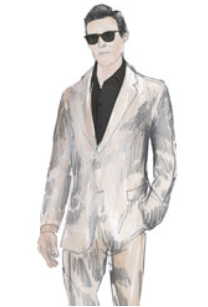
Experienced stage director Matthew Barclay and his creative team made some bold choices which well suited the age and abilities of the cast. They set the opera in the present day, possibly in the high-powered world of film production or in a major training institution for the performing arts or something in between. In this world, the narcissistic Don is a celebrity, a hyperactive young man out to score as many seductions (or assaults) as he can. His prey are all hopeful young performers and students. He woos the women and discards them, and is a violent bully towards the men who get in his way. This interpretation has strong resonances of the #metoo media explosion following the Weinstein scandals. It also touches on a very relevant issue for young performers as they navigate the treacherous world of auditioning and dealing with not always squeaky clean administrations who can easily abuse the new crop of young artists eager to make their mark in their dream profession.
Playing with themes so close to home can be dangerous, but this production navigated the choppy waters well and the young performers clearly relished playing characters they recognised and could relate to. To guide them safely through, was Mozart’s magnificent score and sense of character and drama. The orchestra was led by Music Director, Dr Stephen Mould. While there was a little imbalance due to a smaller string section, there was some fine playing, especially from the woodwinds who shone in the “onstage” band dances near the finale. The recitatives flowed well, supported ably by student repetiteur Russell Hodges.
The production places the reckless and amoral Don Giovanni and his all-suffering henchman Leporello squarely in the centre of the drama. There is extra stage business during the overture – a popular theatrical choice in contemporary opera production, though not always successful. The business introduced some invented back-story in which the Commendatore is also a Hollywood style celebrity, his daughter Anna a budding young starlet. The Don is at first adored by crowds but then ignored when the fickle audience looks for new attractions. This adds an element of revenge and bitterness to the opening scenes. It also however distracts from the portentous music of one of opera’s greatest overtures and creates a melodramatic, even trivialising atmosphere at odds with the score.
Once the opera proper is underway the action follows fast and furious. Unfortunately, the production was overly busy at times, the main distractions were scenic movements starting during the final bars of arias or ensembles. While this made the action fluid, it cut across the naturalistic acting and storytelling. The space is limited and non-theatrical so understandably compromises were required to achieve a flow. The fourth wall was broken and performers entered through the audience, and even sang while pushing passed surprised punters in one scene. This was extremely demanding on the singers to keep in time with the pit, but did add some exciting moments that kept the audience engaged.
The opera calls for four bass or baritone leads and one tenor, a big call for any student production to provide. This cast is blessed with a very fine young baritone for the Don in Haotian Qi. He captured both the Don’s charm and the bullish vanity in equal measures, has clear fluid Italian and a voice of beauty, maturity and expressive colours. His was a brittle, even vicious man, who stops at nothing to achieve his desires. Mobile phones were used as a constant reminder of their ubiquitousness in modern life, but perhaps were a little overused. The disguise scene where the Don masquerades as Leporello became rather confused by the adding of a texted duet, but the scene was redeemed by a wonderful rendition of the famed serenade by Haotian Qi – a real highlight of the performance. His chilling laughter as he is dragged off through crowds by police (an interesting twist to the finale) left the audience in no doubt he is a dangerous unhinged villain.
Jeremy Dubé also displayed a resonant baritone, though perhaps a little uncomfortable in the lower tessitura of Leporello, but brought a humanity and humour to his performance. The third baritone, Henry Wright, made a strong debut as Masetto, the slighted boyfriend of Zerlina.
A standout performer was the bass Nik Roglich as the Commendatore. His rich timbre and handsome features immediately impressed and he added a gravitas and thrilling vocal display to the finale when he returned in ghostly form (not as a statue however) for the dramatic finale. Goosebumps! He has recently moved back to Sydney after studying in Perth and is a performer to watch for – and that very rare voice in a young man – a true bass.
Gavin Brown played the often stolid Ottavio with intensity and ringing tenor vocals. He provided a strong alternative to the Don – a conservative man of morals, genuinely distressed by his fiancé’s disturbed state after her violation at the hands of the Don.
Unusually in this production, of the three female leads, Zerlina took centre stage as prima donna – not the least due to the outstanding beauty and power of Josie Ann Ellem’s voice and personality. She conveyed a naturalness and believability with a voice of real operatic size and weight. Her aria “Vedrai carino” was more stately and Puccini-esque than conventional performance practice, but her fine lower register enriched every ensemble and her duets sparkled with energy.
Sopranos Esther Song and Gabrielle Penney played Anna and Elvira. Penney was particularly engaging and relished the humour added to her role by the director’s take. Undergraduate singers filled out the chorus and also served as scene changers and to give a social context to the actions – particularly strongly in the finale when they become ravenous paparazzi hounding the Don to his demise.
Overall, the production is a provocative new look at a great masterwork, framed in terms young performers related to and expressed with conviction. Staging a full opera with orchestra is a wonderful gift to the young singers at the opera school, an invaluable experience as they develop their craft. It is also a superb opportunity for audiences to hear opera inexpensively, up close and young performers before their careers are launched.
Victoria Watson for SoundsLikeSydney©
A graduate of Melbourne university and VCA, Victoria appeared regularly as a soprano with the Victoria State Opera and has toured and served as artistic director of many chamber ensembles. She has performed with Sydney Symphony Orchestra and for ten years, was artistic director of a major opera education project with Opera Australia. Since 2015 she has moved into directing opera including Mozart’s Cosi Fan Tutte at the Independent theatre.
Victoria has lectured in voice at the major universities in Melbourne, and is currently a tutor at UNSW. Having taught at major Sydney secondary colleges, she now runs a busy private singing studio. She is a published author on opera and a popular freelance music and theatre lecturer and advocate for Australian artists around the world.


One Comment