
Opera Review: The Magic Flute/Pacific Opera Studio
Concert review- The Magic Flute W. A. Mozart
Pacific Opera Studio
The Bondi Pavilion, 28 June, 2025
Reviewed by Victoria Watson
Hot on the heels of their performance of Handel’s magnificent oratorio Samson in May, Pacific Opera Studio’s ensemble of developing operatic artists presented a “pocket opera” version of Mozart’s great singspiel Die Zauberflote (The Magic Flute).
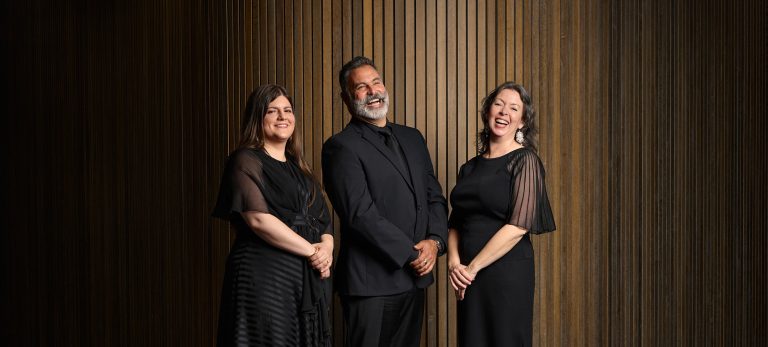
On this occasion, Co-artistic directors of Pacific Opera Studio, Peter Coleman-Wright and Cheryl Barker, engaged conductor Luke Spicer and director Cath Dadd to create an opportunity for their young opera scholars to obtain some valuable theatrical and musical performance experience.
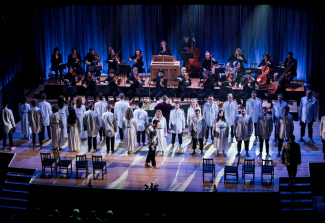
A small ensemble of a string quartet and double bass with a single flute was augmented by electric piano. While a harpsichord or forte-piano might be beyond the company’s means an acoustic piano may have created a finer balance and blend and suited the Classical score.
The full opera was considerably abridged so the evening was more a series of vignettes showcasing the wonderful arias and ensembles in the opera and the talents of the singers.
The director brought in elements of fun and comedy in many of the scenes. Most notably absent was the character of Sarastro (true basses being rare) and his attendant acolytes representing in the full opera, the forces of enlightenment and Masonic principles.
The eclectic approach to the costuming and staging saw Tamino and Pamina as adventurers reminiscent of Raiders of the Lost Ark. The three ladies appeared as sexy Goths, who then morphed into street lads in hoodies for the spirits’ scenes. The queen was in more familiar in attire sporting a striking black and silver gown with a Cruella de Vil vibe. Papageno and Papagena were bright and funky in 60s psychedelic fluoro colours. Monostatos became a Rat Pack crooner/ disco gangster.
Musically the three ladies impressed immediately with their balanced ensemble and clean vocal texture. They worked very well as a team throughout, with some appealing choreography and theatricality. Brea Holland and Amelia Bland were particularly striking in tone and effective in delivery.
Galatea Kneath was a commanding presence as the Queen of the Night. She displayed a vocal timbre and technique to match the demands of this famously fiendish role.
Lucy Vallely was a delightful Pamina, particularly moving in her plaintive aria and the “suicide” scene where she is saved by the spirits’ intervention. The even quality of tone throughout her range and attention to legato phrasing ensured a Pamina of substance and humanity who engaged the emotions as the heroine of the story.
Michael Kaufmann portrayed Tamino more as a laddish explorer than a prince facing trials of enlightenment. Another strong performance from this promising young tenor.
As Papageno, James Pinneri excelled, ably representing the heart of the opera as the clownish but adorable every-man. His German diction was superb and he clearly understood and expressed every word sung. He also handled the switch to English dialogue with aplomb. He was an audience favourite in the tradition that began with Mozart’s friend and fellow Mason, the librettist and first Papageno, Emanuel Schikaneder.
Developing Australian operatic artists have very few opportunities outside universities to extend their skills and obtain invaluable performing experience. The chance for emerging artists to learn roles, sing in ensembles and work on the essential skills of stagecraft and languages cannot be overestimated.
Pacific Opera Studio provides a much-needed experience to a fortunate group each year and is to be applauded and supported by devotees of the operatic art.
Read our review of Pacific Opera Studio’s performance of Handel’s Samson in May.
A graduate of Melbourne university and VCA, Victoria appeared regularly as a soprano with the Victoria State Opera and has toured and served as artistic director of many chamber ensembles.
She has performed with Sydney Symphony Orchestra and for ten years, was artistic director of a major opera education project with Opera Australia. Since 2015 she has moved into directing opera including Mozart’s Cosi Fan Tutte at the Independent theatre.
Victoria has lectured in voice at the major universities in Melbourne, and is currently a tutor at UNSW. Having taught at major Sydney secondary colleges, she now runs a busy private singing studio. She is a published author on opera and a popular freelance music and theatre lecturer and advocate for Australian artists around the world.