CD Review: Leonard Grigoryan’s ‘Solo’

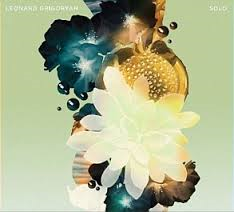
Solo

Guitarist Leonard Grigoryan has made an emphatic statement with the release of his first solo CD, not surprisingly called Solo.

Part of a brilliant music family, Leonard has appeared with his brother Slava as an extremely successful and highly regarded duo, The Grigoryan Brothers. With this CD, he demonstrates that he is as accomplished a solo artist and composer as he is an ensemble player. Whatever the reason he waited so long before striking out by himself, Leonard Grigoryan is ready to be a performer in his own right.

Released by Which Way Music (WWM 017) Solo is a collection of works by old and contemporary guitar masters. Leonard Grigoryan’s flawless technique opens the way for perfect timing and expression. He is able to make the music his own.

The CD opens with the flamboyant Dansa Brasiliera by the Brazilian composer Radames Gnattali (1906 – 1988). Leonard Grigoryan’s affinity with the style and his sure craftmanship are perhaps most obvious in the two works by the Paraguyan composer Augustin Barrios (1885 – 1944), the lyrical Choro da Saudade and Julia Florida where he moulds the rhythms to give and to take, from fiery to languid in true Hispanic style.

For moments of slow elegance there is the poignant Possibly Maybe, “inspired by the anticipation and excitement of going to Norway to record this album, juxtaposed with the uncertainty of what was to come”; and Sarabande and composed by Grigoryan himself, followed by the kittenish Gigue, also composed by him. Modern master Ralph Towner is acknowledged with the improvisatory The Reluctant Bride, and a dedication by Leonard Grigoryan Blues for Ralph, rich with iridescent harmony.

Leonard Grigoryan
Leonard Grigoryan

Heitor-Villa Lobos’ amaranthine collection of Five Preludes, is played with passion and  completes this eminently listenable and brilliantly performed premiere solo venture by Leonard Grigoryan.

The CD was recorded in May 2012 at Rainbow Studios in Oslo. Leonard Grigoryan played a guitar made by Australian luthier Jim Redgate.

Solo is available at music stores and on line at www.whicwaymusic.com

Shamistha de Soysa for SoundsLikeSydney©


Similar Posts

  • Concert Review: Splendour And Mystery/Sydney Chamber Choir

    Splendour and Mystery/ Sydney Chamber Choir
    Verbrugghen Hall, Sydney Conservatorium of Music
    Australian Digital Concert Hall
    25 March, 2023
    In Splendour and Mystery, Sydney Chamber Choir under the direction of Sam Allchurch joined forces with Camerata Antica led by Matthew Manchester and organist Thomas Wilson in an adventurous anthology of music written for double choir. Specialising in the music of the 16th and 17th centuries, the founder of Camerata Antica, Matthew Manchester playing the fiendishly difficult cornetto, was joined by Michael Wyborn, William Kinmont and Paolo Franks playing the equally challenging alto, tenor and bass sackbutts respectively.
    Bookended with pieces by Giovanni Gabrieli with one of his refreshing Canzonas in the middle, the program also contained music by living Australasian composers Clare Maclean and Brooke Shelley, Gabrieli’s contemporary and student Heinrich Schütz and 20th century composers John Tavener and Frank Martin. Together these composers explore and exploit the potential of the double choir with its opportunities for super-rich harmonies, added melodic lines, imitation, choral interplay and variations in the positioning of the singers.
    The opening motet, Gabrieli’s Jubilate Deo omnis terra, C 65 was quite literally a musical shout for joy. A major part of this journey back in time to Renaissance Venice was the unique sound of Camerata Antica. Heralded by the instruments, the 10 lines of the choir sang an uplifting, lively and tightly dotted chorus, alternating with homophonic passages. Allchurch and his ensemble clearly delineated the rhythms, changing time signatures, hemiolas and other displaced accents which created the buoyancy of this celebratory piece.
    John Tavener’s brilliant A Hymn to the Mother of God transcends the mortal and looks to the cosmic powers of Mother Mary. Writing in the style of canon, with imitative lines that start in quick succession and not necessarily in harmony, Tavener creates a sense of ‘other-worldliness’ in this simple but awe-inducing piece in three-sections. It was a slow burn as the two choirs sang with shimmering lightness and a sense of spinning through space, creating vivid colours and  clusters of clashing chords with impressive control as the voices rose in range and dynamic to its full-bodied climax.
    The program moved imperceptibly to the German Magnificat by Heinrich Schütz, as the choirs were joined by organ and instruments. This was a relevant and important inclusion as Gabrieli himself taught Schütz in this multi-choral technique which Schütz then developed in his own style.
    Clare Maclean’s moving Christ the King was sublimely sung, opening in the manner of a plainchant by the female voices which peeled off into mirroring phrases by the other voices, ending in a reprise of the plainchant. Premiered by this choir in 1984, it is precisely opportunities like these which new composers need for their music to be heard and re-heard until it becomes recognizable to listeners and enters the DNA of the concert repertoire.
    The short and brilliant burst of Gabrieli’s Canzona seconda, C 187  from Camerata Antica showcased these rudimentary instruments in all their imperfect glory as the choir positioned itself for Frank’s only unaccompanied choral work, the demanding  Mass for double choir, considered to be one of the finest and most complex pieces of 20th century choral music. The choir did ample justice to this piece which incorporates the aesthetics of Renaissance music, French Impressionism, Schoenberg’s twelve-note system and J S Bach. The altos began the Kyrie with a freely-flowing, supplicating melody; the Gloria built step-wise to cluster chords; the Credo was a business-like affirmation of faith; the canon-styled Et Resurrexit was levity, hope and word-painting to perfection; the Sanctus introduced softer harmonies from the male voices. The mass, Version 1, ended with a powerful Benedictus. Fast forward to 1926 and Martin added the Agnus Dei, the crowning glory to this choral magnum opus. The mass culminated in a glorious unification of the choirs.
    Brooke Shelley’s Heavenly Father, composed in 2022, performed in the presence of the composer was premiered in November 2022, by the Sydney Chamber Choir. A lyrical and beautifully textured piece, it is very pleasing that it has quickly been programmed again. Like the slightly older piece by Maclean, it is critical that new pieces of merit such as these, are given regular and frequent hearings so that they may be heard widely and face the test of time.
    Finally, Gabrieli’s Magnificat a 14, C 79 brought together the full instrumental and vocal forces of the ensemble. Using the 16th century Venetian technique of cori spezzati (split choirs), the brighter sound of the female voices and cornetto took to the left gallery with the male voices and the thrilling grunt of the bass and other sackbutts in the right gallery with a mixed ensemble placed and organ placed centrally on stage.
    This was an intelligent and audacious program from Allchurch, performed with glorious sound by a choir secure in technique, pitch and musicianship.

  • Concert Review: Karakorum/ Australian Brandenburg Orchestra

    Karakorum Australian Brandenburg Orchestra 25 July 2018 City Recital Hall, Sydney Written by Deen Hamaker   The journey of an itinerant 13th century monk forms the basis of this fascinating syncretic concert that reinterprets the sound world of Medieval Central Asia. Charting William of Rubruck’s journey leaving Constantinople in 1253 across Central Asia to the…

  • Concert Review: Spanish Baroque/ Australian Brandenburg Orchestra And C!RCA

    Spanish Baroque The Australian Brandenburg Orchestra C!RCA City Recital Hall, Sydney May 3, 2017 It was as though a nomadic band of acrobats complete with trobairitz and Baroque instrumentalists had somehow how transcended time and found themselves in Sydney, when the Australian Brandenburg Orchestra directed by the ever-inventive Paul Dyer AO, presented the electrifying Spanish…

Leave a Reply