CD Review: Pillar Of Wisdom,Cantigas De Santa Maria IV/The Renaissance Players
download (1)

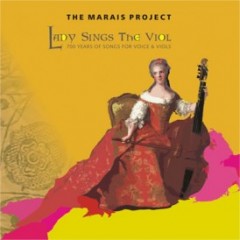
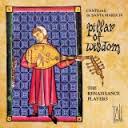
Cantigas de Santa Maria Volume IV Pillar of Wisdom

The Renaissance Players, Tall Poppies, TP231

The Renaissance Players have released the penultimate volume in their 5 CD collection collectively called the Cantigas de Santa Maria. This CD, Pillar of Wisdom contains 10 songs, performed by the Renaissance Players, directed by Winsome Evans.

A Spanish and Portuguese medieval monophonic song, the cantigas are a collection of 420 songs about the Virgin Mary written between about 1270 and 1290 under the direction of King Alfonso X El sabio (b Toledo, 23 Nov 1221; d Seville, 4 April 1284), Spanish monarch, patron, poet and composer and King of Castile and León from 1252. Some of the cantigas are hymns of praise to the Virgin Mary, but most tell of miracles wrought by her. Popular till the middle of the 15th century, the songs composed under Alfonso’s direction are the only cantigas which survive today.

In inimitable style, Winsome Evans has gathered together a band of musicians and instruments which express the style and sentiments of the times. Through her lifelong research she has aimed to understand and replicate the aesthetics of the music through the nuances of tonality, rudimentary harmonies, period ornamentation, rhythmic devices, vocal production and word stress.

Evans herself plays multiple instruments including the alto shawm and bombarde,  (early versions of the oboe), harp and related plucked  stringed instruments the sinfonye and psaltery; then there’s the vielle – a bowed instrument played by Nick Wales, the gittern played by Llew Kiek, Andrew Lambkin on a selection of percussion instruments like the pandero (large drums) and finger cymbals, and Barbara Stackpool playing the castanets. The three sopranos of the troupe, Mina Kanaridis, Melissa Irwin and Belinda Montgomery sing exquisitely in rustic style.

The cantigas are sung in the Portuguese-Galician language, because Galicia was part of Alfonso’s kingdom and the language was considered by Spanish poets of the time to be well suited to lyric poetry. The full text with English translations is supplied in the booklet which accompanies the CD. The booklet also contains comprehensive historical notes, comments and illustrations.

Recorded in St Peter’s in Sydney during 2013 on the Tall Poppies label (TP 231), it recreates the acoustic of a ‘large stone church’, where these cantigas were most likely originally performed.

Pillar of Wisdom stands on its own merit as a peregrination into devotional songs of Medieval Iberia. However, it is also an important historical document as an expertly researched and beautifully performed repository of the music of the times and the instruments played. As well, textual references indicate some of the political and religious tensions which prevailed between Christians, Jews and Muslims in the region. Not least, it is the fourth in a collection of five CDs and well worth adding to the collection.


Shamistha de Soysa for SoundsLikeSydney©


Similar Posts

  • From Cadenzas to Riffs: Amy Dickson’s ‘Catch Me If You Can’

    Amy Dickson, the Sydney born saxophonist has released her 3rd solo CD Catch Me If You Can (ABC Classics 481 0118) a pleasurable demonstration of her prowess and the potential of this instrument. Playing the alto saxophone, she has recorded three complete and substantial works, Escapades by John Williams (b1932), Concerto for Saxophone by Michael Kamen (1948 – 2003) and…

  • Tafelmusik reviewed….

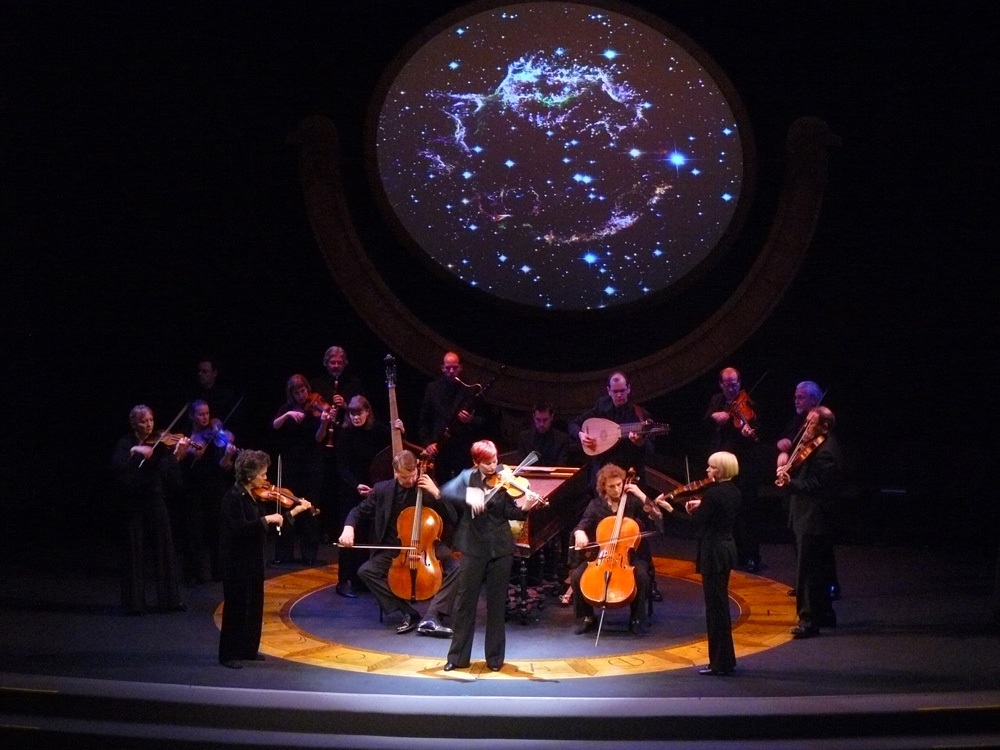
      Peter McCallum reviews Tafelmusik for the Sydney Morning Herald. Tafelmusik repeat their concert at the City Recital Hall on Saturday March 10th at 2 pm. http://www.smh.com.au/entertainment/music/spirited-delight-of-ancient-analogy-between-music-and-cosmos-20120306-1ui98.html  

  • Concert Review: Splendour And Mystery/Sydney Chamber Choir

    Splendour and Mystery/ Sydney Chamber Choir
    Verbrugghen Hall, Sydney Conservatorium of Music
    Australian Digital Concert Hall
    25 March, 2023
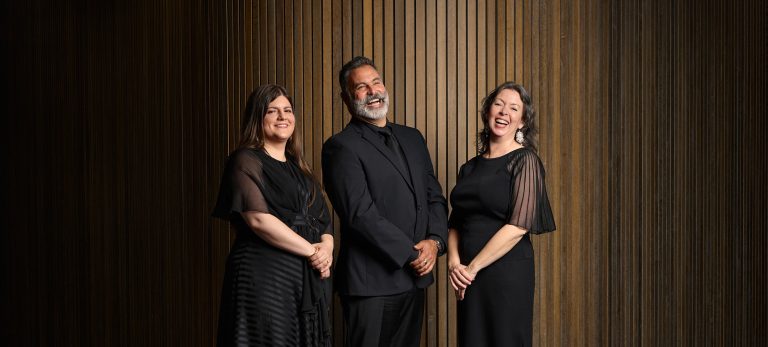
    In Splendour and Mystery, Sydney Chamber Choir under the direction of Sam Allchurch joined forces with Camerata Antica led by Matthew Manchester and organist Thomas Wilson in an adventurous anthology of music written for double choir. Specialising in the music of the 16th and 17th centuries, the founder of Camerata Antica, Matthew Manchester playing the fiendishly difficult cornetto, was joined by Michael Wyborn, William Kinmont and Paolo Franks playing the equally challenging alto, tenor and bass sackbutts respectively.
    Bookended with pieces by Giovanni Gabrieli with one of his refreshing Canzonas in the middle, the program also contained music by living Australasian composers Clare Maclean and Brooke Shelley, Gabrieli’s contemporary and student Heinrich Schütz and 20th century composers John Tavener and Frank Martin. Together these composers explore and exploit the potential of the double choir with its opportunities for super-rich harmonies, added melodic lines, imitation, choral interplay and variations in the positioning of the singers.
    The opening motet, Gabrieli’s Jubilate Deo omnis terra, C 65 was quite literally a musical shout for joy. A major part of this journey back in time to Renaissance Venice was the unique sound of Camerata Antica. Heralded by the instruments, the 10 lines of the choir sang an uplifting, lively and tightly dotted chorus, alternating with homophonic passages. Allchurch and his ensemble clearly delineated the rhythms, changing time signatures, hemiolas and other displaced accents which created the buoyancy of this celebratory piece.
    John Tavener’s brilliant A Hymn to the Mother of God transcends the mortal and looks to the cosmic powers of Mother Mary. Writing in the style of canon, with imitative lines that start in quick succession and not necessarily in harmony, Tavener creates a sense of ‘other-worldliness’ in this simple but awe-inducing piece in three-sections. It was a slow burn as the two choirs sang with shimmering lightness and a sense of spinning through space, creating vivid colours and  clusters of clashing chords with impressive control as the voices rose in range and dynamic to its full-bodied climax.
    The program moved imperceptibly to the German Magnificat by Heinrich Schütz, as the choirs were joined by organ and instruments. This was a relevant and important inclusion as Gabrieli himself taught Schütz in this multi-choral technique which Schütz then developed in his own style.
    Clare Maclean’s moving Christ the King was sublimely sung, opening in the manner of a plainchant by the female voices which peeled off into mirroring phrases by the other voices, ending in a reprise of the plainchant. Premiered by this choir in 1984, it is precisely opportunities like these which new composers need for their music to be heard and re-heard until it becomes recognizable to listeners and enters the DNA of the concert repertoire.
    The short and brilliant burst of Gabrieli’s Canzona seconda, C 187  from Camerata Antica showcased these rudimentary instruments in all their imperfect glory as the choir positioned itself for Frank’s only unaccompanied choral work, the demanding  Mass for double choir, considered to be one of the finest and most complex pieces of 20th century choral music. The choir did ample justice to this piece which incorporates the aesthetics of Renaissance music, French Impressionism, Schoenberg’s twelve-note system and J S Bach. The altos began the Kyrie with a freely-flowing, supplicating melody; the Gloria built step-wise to cluster chords; the Credo was a business-like affirmation of faith; the canon-styled Et Resurrexit was levity, hope and word-painting to perfection; the Sanctus introduced softer harmonies from the male voices. The mass, Version 1, ended with a powerful Benedictus. Fast forward to 1926 and Martin added the Agnus Dei, the crowning glory to this choral magnum opus. The mass culminated in a glorious unification of the choirs.
    Brooke Shelley’s Heavenly Father, composed in 2022, performed in the presence of the composer was premiered in November 2022, by the Sydney Chamber Choir. A lyrical and beautifully textured piece, it is very pleasing that it has quickly been programmed again. Like the slightly older piece by Maclean, it is critical that new pieces of merit such as these, are given regular and frequent hearings so that they may be heard widely and face the test of time.
    Finally, Gabrieli’s Magnificat a 14, C 79 brought together the full instrumental and vocal forces of the ensemble. Using the 16th century Venetian technique of cori spezzati (split choirs), the brighter sound of the female voices and cornetto took to the left gallery with the male voices and the thrilling grunt of the bass and other sackbutts in the right gallery with a mixed ensemble placed and organ placed centrally on stage.
    This was an intelligent and audacious program from Allchurch, performed with glorious sound by a choir secure in technique, pitch and musicianship.

Leave a Reply