Concert Review: From Chamber To Charleston/Omega Ensemble/Maria Raspopova

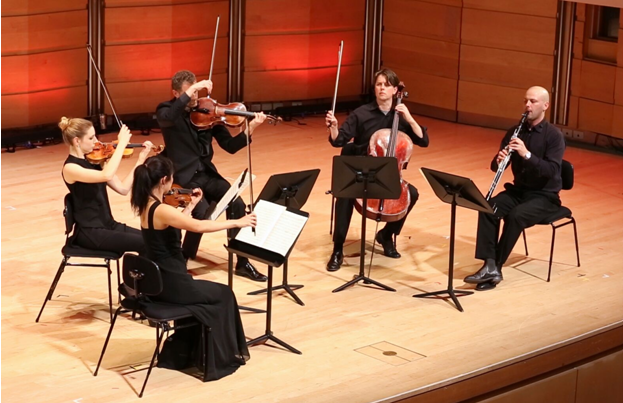
Omega Ensemble at the City Recital Hall. Image supplied.

Omega Ensemble

From Chamber to Charleston

Thursday 17 September 7.30, 

City Recital Hall, Sydney.

In spite of an eleventh-hour personnel change (pianist Daniel de Borah unfortunately having to withdraw from the concert, replaced by Maria Raspopova), the latest addition to Omega Ensemble’s 2015 series was a polished affair. Clarinettist David Rowden’s company of chamber music all-stars performed with undiluted joy and a deliciously expressive tang, as they lovingly sculpted gems by Ravel, Mozart, Martinu and Saint-Saëns. 

Ravel’s sparkling Introduction and Allegro drew dreamlike music-making from Omega, with fresh nuances of instrumental colour suffusing their performance. Harpist Jane Rosenson’s dazzling clarity of tone mingled satisfyingly with the ensemble, dauntlessly led from the string end by the remarkable physicality of violinist Rebecca Chan. Reprogrammed from Hummel’s Septet in D minor, Omega’s rendition of Mozart’s Clarinet Quintet K581 was a dynamic one, the four additional semitones on the low-end of the basset clarinet producing unimpeded phrasing which was immediately noticeable for listeners familiar with the standard clarinet version. Rowden’s tone was rounded and sweet, and with exceptional economy of movement he and the ensemble brought Mozart’s dialogues between clarinet and first violin, at times playful and at times melodramatic, to the forefront.

Young Russian pianist Maria Raspopova proved an able stand-in for Daniel de Borah in Martinu’s comically evocative La Revue de Cuisine, a chamber ballet soaked in the melting pot of influences that defined early twentieth century Paris. A melange of jazz-inflected chords and rhythms, the work was performed with all requisite winks and nudges by the charismatic ensemble, which for the concert’s second half included the light-hearted precision of the trumpet, admirably handled by Owen Morris. The concluding Septet, Camille Saint-Saens’ opus 65, was one of the composer’s great successes. In its four movements the trumpet is seamlessly mixed into the chamber music sound-world, and on this occasion Morris’ bright, clear tone brought conviction both to the instrument’s idiosyncrasies and its surprising ability to meld with traditional chamber instruments (here, piano, violins, viola, cello and double bass). The flawless unisons of the Minuet and Maria Raspopova’s exuberant gestures in the triumphant concluding movement were just two memorable moments in this crisply motivic and criminally underrated septet.

Luke Iredale for SoundsLikeSydney©

Luke is a choral tenor, clarinetist and writer, and earns a crust working in Arts Management with UNSW’s Music Performance Unit. He enjoys the music of Schubert, Howells, Dylan and Hetfield.
Similar Posts

  • Concert Review: Splendour And Mystery/Sydney Chamber Choir

    Splendour and Mystery/ Sydney Chamber Choir
    Verbrugghen Hall, Sydney Conservatorium of Music
    Australian Digital Concert Hall
    25 March, 2023
    In Splendour and Mystery, Sydney Chamber Choir under the direction of Sam Allchurch joined forces with Camerata Antica led by Matthew Manchester and organist Thomas Wilson in an adventurous anthology of music written for double choir. Specialising in the music of the 16th and 17th centuries, the founder of Camerata Antica, Matthew Manchester playing the fiendishly difficult cornetto, was joined by Michael Wyborn, William Kinmont and Paolo Franks playing the equally challenging alto, tenor and bass sackbutts respectively.
    Bookended with pieces by Giovanni Gabrieli with one of his refreshing Canzonas in the middle, the program also contained music by living Australasian composers Clare Maclean and Brooke Shelley, Gabrieli’s contemporary and student Heinrich Schütz and 20th century composers John Tavener and Frank Martin. Together these composers explore and exploit the potential of the double choir with its opportunities for super-rich harmonies, added melodic lines, imitation, choral interplay and variations in the positioning of the singers.
    The opening motet, Gabrieli’s Jubilate Deo omnis terra, C 65 was quite literally a musical shout for joy. A major part of this journey back in time to Renaissance Venice was the unique sound of Camerata Antica. Heralded by the instruments, the 10 lines of the choir sang an uplifting, lively and tightly dotted chorus, alternating with homophonic passages. Allchurch and his ensemble clearly delineated the rhythms, changing time signatures, hemiolas and other displaced accents which created the buoyancy of this celebratory piece.
    John Tavener’s brilliant A Hymn to the Mother of God transcends the mortal and looks to the cosmic powers of Mother Mary. Writing in the style of canon, with imitative lines that start in quick succession and not necessarily in harmony, Tavener creates a sense of ‘other-worldliness’ in this simple but awe-inducing piece in three-sections. It was a slow burn as the two choirs sang with shimmering lightness and a sense of spinning through space, creating vivid colours and  clusters of clashing chords with impressive control as the voices rose in range and dynamic to its full-bodied climax.
    The program moved imperceptibly to the German Magnificat by Heinrich Schütz, as the choirs were joined by organ and instruments. This was a relevant and important inclusion as Gabrieli himself taught Schütz in this multi-choral technique which Schütz then developed in his own style.
    Clare Maclean’s moving Christ the King was sublimely sung, opening in the manner of a plainchant by the female voices which peeled off into mirroring phrases by the other voices, ending in a reprise of the plainchant. Premiered by this choir in 1984, it is precisely opportunities like these which new composers need for their music to be heard and re-heard until it becomes recognizable to listeners and enters the DNA of the concert repertoire.
    The short and brilliant burst of Gabrieli’s Canzona seconda, C 187  from Camerata Antica showcased these rudimentary instruments in all their imperfect glory as the choir positioned itself for Frank’s only unaccompanied choral work, the demanding  Mass for double choir, considered to be one of the finest and most complex pieces of 20th century choral music. The choir did ample justice to this piece which incorporates the aesthetics of Renaissance music, French Impressionism, Schoenberg’s twelve-note system and J S Bach. The altos began the Kyrie with a freely-flowing, supplicating melody; the Gloria built step-wise to cluster chords; the Credo was a business-like affirmation of faith; the canon-styled Et Resurrexit was levity, hope and word-painting to perfection; the Sanctus introduced softer harmonies from the male voices. The mass, Version 1, ended with a powerful Benedictus. Fast forward to 1926 and Martin added the Agnus Dei, the crowning glory to this choral magnum opus. The mass culminated in a glorious unification of the choirs.
    Brooke Shelley’s Heavenly Father, composed in 2022, performed in the presence of the composer was premiered in November 2022, by the Sydney Chamber Choir. A lyrical and beautifully textured piece, it is very pleasing that it has quickly been programmed again. Like the slightly older piece by Maclean, it is critical that new pieces of merit such as these, are given regular and frequent hearings so that they may be heard widely and face the test of time.
    Finally, Gabrieli’s Magnificat a 14, C 79 brought together the full instrumental and vocal forces of the ensemble. Using the 16th century Venetian technique of cori spezzati (split choirs), the brighter sound of the female voices and cornetto took to the left gallery with the male voices and the thrilling grunt of the bass and other sackbutts in the right gallery with a mixed ensemble placed and organ placed centrally on stage.
    This was an intelligent and audacious program from Allchurch, performed with glorious sound by a choir secure in technique, pitch and musicianship.

  • Tafelmusik reviewed….

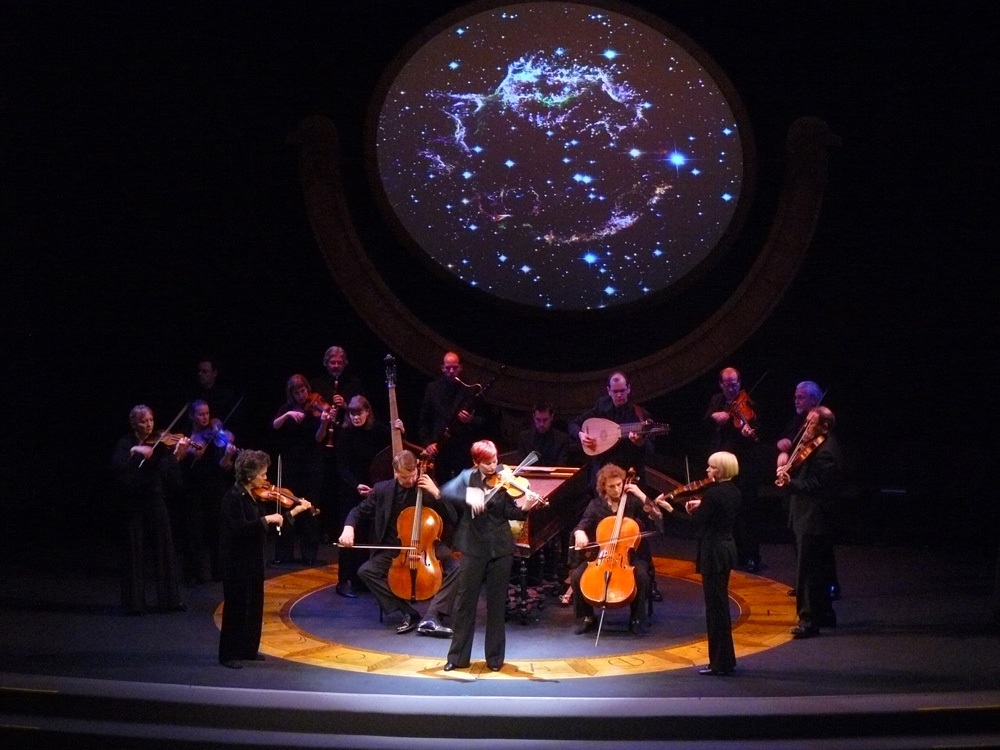
      Peter McCallum reviews Tafelmusik for the Sydney Morning Herald. Tafelmusik repeat their concert at the City Recital Hall on Saturday March 10th at 2 pm. http://www.smh.com.au/entertainment/music/spirited-delight-of-ancient-analogy-between-music-and-cosmos-20120306-1ui98.html  

  • The Omega Ensemble – A World Premiere by Mark Isaacs,Stanhope and Mahler’s Fourth

    The Omega Ensemble presents an unusual and intimate performance of the music of Mahler in the July concert of their Virtuoso Series with guest artist, New York based Australian soprano, Jane Sheldon. Accompanying this German epic are two Australian works including a world premiere of  Chamber Symphony for ensemble and soprano, composed by Mark Isaacs and commissioned especially…

  • Omega Ensemble – Summer Winds: From Beethoven To Ravel

    Omega Ensemble sets sail in a discovery of the mystical and mythical, celebrating all things woodwind in Summer Winds: From Beethoven to Ravel. The programme includes Debussy’s virtuosic Syrinx for Solo Flute, Beethoven’s Duo for Bassoon and Clarinet and a striking woodwind arrangement of Ravel’s Le Tombeau de Couperin, a deeply personal homage to friends he lost during…

Leave a Reply