Concert Review: Ludovico Einaudi

download (1)

Ludovico Einaudi, piano

Australian Opera and Ballet Orchestra

Concert Hall, Sydney Opera House,

February 8, 2015.

Italian pianist Ludovico Einaudi mesmerised his capacity audience at the Sydney Opera House  last weekend,  on this, his third visit to Sydney. Einaudi performed a selection of his own compositions, accompanied by 19 members of the Australian Opera and Ballet Orchestra  whom he directed from the piano.

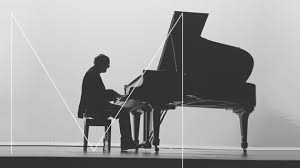
Einaudi placed his piano in the centre of the stage, lid elevated just halfway, surrounded by the orchestra, presenting the piano as very much a part of the ensemble rather than a solo instrument. The entire experience was designed to induce a sense of calm. The lighting was low and the haze was about.  Einaudi radiated serenity as he walked slowly onto the stage. His touch was delicate, coaxing plaintive melodies above a babbling chordal bass; but there were moments of percussiveness and restlessness as well, providing an effective foil to the tranquility and introspection.

Einaudi’s classical training is evident. He graduated in composition from the Verdi Conservatorium in Milan and furthered his studies with Luciano Berio. Subsequently influenced by a spectrum of styles and musicians, Einaudi has gone on to become one of the world’s most successful performers,  recording artists and composers, with his concerts selling out in major venues around the world and his discs and movie scores winning prestigious awards.

Unfortunately there was no programme and one can be familiar with Einaudi’s music without being able to recognise all the works that he played. Tracks from his recording In A Time Lapse were at the core of the programme, most notably, I Giorni.

There was fine playing from the Australian Opera and Ballet Orchestra, deservedly on stage and performing with an instrumental soloist in a welcome change to their usual habitat in the pit of the opera theatre.

Einaudi’s minimalism stands distinct from his peers perhaps for its romantic and filmic elements. Although there is clinical rhythmicity in his music, there is also passion in the way he teases every last moment of rubato from the sounds he has left suspended in mid-air; his harmonies are warm.

Einaudi’s effortless melodies, recurring themes,  barely-there ornamentation, straightforward rhythms and arpeggiated chords induce a measure of meditative quietude as heartbeats fall into step with the flow of sound and breaths rise and fall in time.

The understated simplicity of Einaudi and his music had a visceral effect lulling his listeners into an escapist calm. Perhaps this is what lies at the heart of his massive appeal.

Despite the hypnotic effect of the music, the audience roused themselves to a standing ovation demanding several encores to which Einaudi graciously responded.


Shamistha de Soysa for SoundsLikeSydney©
Similar Posts

  • Opera Review: Il Viaggio A Reims/ Opera Australia

    Il Viaggio a Reims Opera Australia Joan Sutherland Theatre, Sydney Opera House, October 24th, 2019 Written by Victoria Watson The father of 19th century bel canto Gioachino Rossini wrote Il Viaggio a Reims specifically to coincide with and celebrate the 1825 coronation of the previously exiled King Charles X at Reims in rural France. The libretto…

  • Concert Review: Mozart’s Fortepiano/Kristian Bezuidenhout/Australian Brandenburg Orchestra

    It was an evening when the gentlest of instruments took centre stage. The Australian Brandenburg Orchestra, performed music for fortepiano and period flute by Mozart and his contemporaries. Upstaged by its more precocious descendent the pianoforte, the fortepiano is infrequently heard as a solo instrument, often being relegated to the role of an accompanying instrument….

  • Concert Review: Splendour And Mystery/Sydney Chamber Choir

    Splendour and Mystery/ Sydney Chamber Choir
    Verbrugghen Hall, Sydney Conservatorium of Music
    Australian Digital Concert Hall
    25 March, 2023
    In Splendour and Mystery, Sydney Chamber Choir under the direction of Sam Allchurch joined forces with Camerata Antica led by Matthew Manchester and organist Thomas Wilson in an adventurous anthology of music written for double choir. Specialising in the music of the 16th and 17th centuries, the founder of Camerata Antica, Matthew Manchester playing the fiendishly difficult cornetto, was joined by Michael Wyborn, William Kinmont and Paolo Franks playing the equally challenging alto, tenor and bass sackbutts respectively.
    Bookended with pieces by Giovanni Gabrieli with one of his refreshing Canzonas in the middle, the program also contained music by living Australasian composers Clare Maclean and Brooke Shelley, Gabrieli’s contemporary and student Heinrich Schütz and 20th century composers John Tavener and Frank Martin. Together these composers explore and exploit the potential of the double choir with its opportunities for super-rich harmonies, added melodic lines, imitation, choral interplay and variations in the positioning of the singers.
    The opening motet, Gabrieli’s Jubilate Deo omnis terra, C 65 was quite literally a musical shout for joy. A major part of this journey back in time to Renaissance Venice was the unique sound of Camerata Antica. Heralded by the instruments, the 10 lines of the choir sang an uplifting, lively and tightly dotted chorus, alternating with homophonic passages. Allchurch and his ensemble clearly delineated the rhythms, changing time signatures, hemiolas and other displaced accents which created the buoyancy of this celebratory piece.
    John Tavener’s brilliant A Hymn to the Mother of God transcends the mortal and looks to the cosmic powers of Mother Mary. Writing in the style of canon, with imitative lines that start in quick succession and not necessarily in harmony, Tavener creates a sense of ‘other-worldliness’ in this simple but awe-inducing piece in three-sections. It was a slow burn as the two choirs sang with shimmering lightness and a sense of spinning through space, creating vivid colours and  clusters of clashing chords with impressive control as the voices rose in range and dynamic to its full-bodied climax.
    The program moved imperceptibly to the German Magnificat by Heinrich Schütz, as the choirs were joined by organ and instruments. This was a relevant and important inclusion as Gabrieli himself taught Schütz in this multi-choral technique which Schütz then developed in his own style.
    Clare Maclean’s moving Christ the King was sublimely sung, opening in the manner of a plainchant by the female voices which peeled off into mirroring phrases by the other voices, ending in a reprise of the plainchant. Premiered by this choir in 1984, it is precisely opportunities like these which new composers need for their music to be heard and re-heard until it becomes recognizable to listeners and enters the DNA of the concert repertoire.
    The short and brilliant burst of Gabrieli’s Canzona seconda, C 187  from Camerata Antica showcased these rudimentary instruments in all their imperfect glory as the choir positioned itself for Frank’s only unaccompanied choral work, the demanding  Mass for double choir, considered to be one of the finest and most complex pieces of 20th century choral music. The choir did ample justice to this piece which incorporates the aesthetics of Renaissance music, French Impressionism, Schoenberg’s twelve-note system and J S Bach. The altos began the Kyrie with a freely-flowing, supplicating melody; the Gloria built step-wise to cluster chords; the Credo was a business-like affirmation of faith; the canon-styled Et Resurrexit was levity, hope and word-painting to perfection; the Sanctus introduced softer harmonies from the male voices. The mass, Version 1, ended with a powerful Benedictus. Fast forward to 1926 and Martin added the Agnus Dei, the crowning glory to this choral magnum opus. The mass culminated in a glorious unification of the choirs.
    Brooke Shelley’s Heavenly Father, composed in 2022, performed in the presence of the composer was premiered in November 2022, by the Sydney Chamber Choir. A lyrical and beautifully textured piece, it is very pleasing that it has quickly been programmed again. Like the slightly older piece by Maclean, it is critical that new pieces of merit such as these, are given regular and frequent hearings so that they may be heard widely and face the test of time.
    Finally, Gabrieli’s Magnificat a 14, C 79 brought together the full instrumental and vocal forces of the ensemble. Using the 16th century Venetian technique of cori spezzati (split choirs), the brighter sound of the female voices and cornetto took to the left gallery with the male voices and the thrilling grunt of the bass and other sackbutts in the right gallery with a mixed ensemble placed and organ placed centrally on stage.
    This was an intelligent and audacious program from Allchurch, performed with glorious sound by a choir secure in technique, pitch and musicianship.

  • CD Review: From The Hungry Waiting Country / Halcyon / Elliot Gyger

    From the Hungry Waiting Country is a new release by Halcyon, performing the music of contemporary Australian composer, Elliot Gyger. Released on the Tall Poppies label, it contains three works by Gyger, Giving Voice (2012), Petit Testament (2008) and the cycle from which the disc takes its title, From the Hungry Waiting Country (2006). Halcyon’s…

  • CD Review: A Baroque Christmas/ Australian Chamber Choir/ Move Records

    The Australian Chamber Choir has released a CD of baroque Christmas music compiled from their ample archive of recent live performances. A Baroque Christmas is a small but rewarding compensation for the lack of live performing opportunities during 2020. The recordings are taken from concerts in Victoria in November and December of 2018 and 2019…

  • Concert Review: The Italian/ The Metropolitan Orchestra

    ‘The Italian’/ The Metropolitan Orchestra (TMO)/ Michael Wray, principal horn/Sarah-Grace Williams, conductor Eugene Goossens Hall, ABC Centre, Ultimo 11 June 2016 Written by Ria Andriani  The third concert in The Metropolitan Orchestra (TMO) Met series continued last weekend in the tradition of presenting excellent performances to a full house. Under the baton of conductor Sarah-Grace Williams,…

Leave a Reply