Concert Review: The Metropolitan Orchestra/ The ‘Great’
Glen Christensen
Glenn Christensen

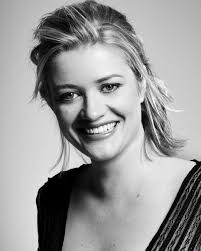
‘The Metropolitan Orchestra, conductor Sarah-Grace Williams

Violin soloist Glenn Christensen

20 August 2016, Eugene Goossens Hall, ABC Centre, Ultimo 

Written by Larry Turner

The Metropolitan Orchestra is arguably the doyen of Sydney’s non-salaried symphony orchestras.  In the fourth concert of their main 2016 Sydney series they performed just two works which are now standard repertoire but neither of which was successful during their composer’s lifetime.

Beethoven wrote his violin concerto in the uncharacteristically short period of just a few weeks for a benefit concert in Vienna in December 1806.  Its completion was so delayed that by the time the orchestral parts were copied there was time for only a single rehearsal.  Unsurprisingly, the work was not initially well received. There were no such fears on this occasion however as this performance under The Metropolitan Orchestra’s Artistic Director Sarah-Grace Williams was very well prepared.

The violin soloist was the young virtuoso Glenn Christensen whose career has been advancing rapidly.  Shortly after graduating from university he was appointed Principal First Violin with the Queensland Symphony Orchestra and he is now a member of the Australian Chamber Orchestra.

Christensen’s playing gained in confidence and projection as the performance progressed.  Initially there were some minor issues of intonation and precise figuration, but these were soon supplanted by some superb playing and especially spot-on intonation in the highest register.  His approach to the work was energetic whilst observing the score’s frequent dolce markings.  He launched vigorously into the concluding rondo but this resulted in some unsteadiness in the synchronisation with the syncopated orchestral cross-rhythms. Christensen played the Kreisler cadenzas: the first with a leisurely, romantic freedom of expression and the virtuoso last movement cadenza with fiery assertiveness and technical finesse.

The orchestra provided excellent support throughout. The strings demonstrated disciplined unanimity of phrasing and dynamics throughout.  In the opening they provided a bed of rich sonority and in the slow movement their contribution was almost rhapsodic.  Among the wind, there were some nicely phrased contributions, especially from the bassoonist Tony Grimm.

The designation of ‘The Great’ for Schubert’s ninth symphony, in C major, may well have been an editorial label to distinguish it from his earlier symphony in C (number six), but it is also appropriate for its almost unprecedented length. Completed in 1826, just two years before his death, it is much longer than most of the symphonies of that time – approaching the length of Beethoven’s ninth, which was first performed just a year before Schubert started writing this, his last symphony. The work’s length has been the subject of both positive and negative comment.  In writing to Mendelssohn, Schumann praised its ‘heavenly length’.  However in 1892 we find George Bernard Shaw, a usually perspicacious music critic, complaining that ‘a more exasperatingly brainless composition was never put on paper.’  The Metropolitan Orchestra’s performance made it easy to side with Schumann, even if the length did not include all the notated repeats in the last two movements.

The work opens with an unaccompanied horn call, a motif which permeates the rest of the movement. This exposed entry was handsomely played by the two horns (Michael Wray and Adrian Hallam).  Sarah-Grace Williams opened with a sensible, flowing tempo and her transitions to faster tempi were well judged and executed.

In the second movement the oboe solos were very attractively played by Matthew Bubb with an appealingly warm and rounded tone.  His dialogues with the clarinet were nicely answered by the principal clarinettist Andrew Doyle.  The strings again demonstrated their impressive unanimity, with some notably well-blended cantabile playing from the cellos.

The wind instruments had more prominence in the third movement, especially in the swaggering trio section which provided further opportunities to hear the excellent wind principals, including fine flute playing from Alexandra Castle. The last movement was presented in a genial manner, perhaps less dramatic than some other interpretations.  It provided a satisfying conclusion to an excellent performance.

The next concert from the Metropolitan Orchestra will be on 12 November.  It will include standard repertoire works by Mendelssohn and Beethoven as well an intriguing work for Basset clarinet by Elena Kats-Chernin.

SoundsLikeSydney©

Larry Turner is an avid attender of concerts and operas and has been reviewing performances for Sounds Like Sydney for several years.  As a chorister for many years in both Sydney and London, he particularly enjoys music from both the great a capella period and the baroque.  He has written programme notes for Sydney Philharmonia, the Intervarsity Choral Festival and the Sydneian Bach Choir and is currently part of a team researching the history of Sydney Philharmonia for its forthcoming centenary.


Similar Posts

  • Concert Review: Dido And Aeneas/ Sydney Chamber Choir/ Muffat collective

    Sydney Chamber Choir/Muffat Collective Great Hall, University of Sydney 6 October 2017 Written by Wendy McLeod The Great Hall of the University of Sydney was packed out when the Sydney Chamber Choir conducted by Roland Peelman and accompanied by the Muffat Collective, presented an early music programme of love and loss which featured madrigals by…

  • Australian Chamber Orchestra Welcomes Guest Director Lorenza Borrani For Beethoven & Prokofiev

    The Australian Chamber Orchestra welcomes back the charismatic Italian violinist Lorenza Borrani as Guest Director of its upcoming national tour titled Beethoven & Prokofiev. One of Europe’s most sought after violinists Lorenza is a musician close to the heart of the ACO. When she first performed with them in 2016, the ACO musicians were captivated by her spirited…

  • The Metropolitan Chamber Orchestra ends 2011 with a bang.

    In their final concert for 2011, the Metropolitan Chamber Orchestra conducted by Sarah-Grace Williams presents a trio of joyous works. Gounod’s Petite Symphony raises the curtain. A chamber work for nine wind instruments it showcases Gounod’s writing beyond his traditional genre, sans voices and opera orchestra. It’s style though, is unmistakable. Also on the programme,…

  • Concert Review: Four Last Songs/ Omega Ensemble/ Lee Abrahmsen

    Four Last Songs Lee Abrahmsen, soprano with Omega Ensemble City Recital Hall,  April 20, 2016 An augmented Omega Ensemble was joined by soprano Lee Abrahmsen for Four Last Songs a programme of music which included original works, transcriptions and a world premiere by Andrew Ford. The programme for Four Last Songs took its name from…

  • Concert Review: Splendour And Mystery/Sydney Chamber Choir

    Splendour and Mystery/ Sydney Chamber Choir
    Verbrugghen Hall, Sydney Conservatorium of Music
    Australian Digital Concert Hall
    25 March, 2023
    In Splendour and Mystery, Sydney Chamber Choir under the direction of Sam Allchurch joined forces with Camerata Antica led by Matthew Manchester and organist Thomas Wilson in an adventurous anthology of music written for double choir. Specialising in the music of the 16th and 17th centuries, the founder of Camerata Antica, Matthew Manchester playing the fiendishly difficult cornetto, was joined by Michael Wyborn, William Kinmont and Paolo Franks playing the equally challenging alto, tenor and bass sackbutts respectively.
    Bookended with pieces by Giovanni Gabrieli with one of his refreshing Canzonas in the middle, the program also contained music by living Australasian composers Clare Maclean and Brooke Shelley, Gabrieli’s contemporary and student Heinrich Schütz and 20th century composers John Tavener and Frank Martin. Together these composers explore and exploit the potential of the double choir with its opportunities for super-rich harmonies, added melodic lines, imitation, choral interplay and variations in the positioning of the singers.
    The opening motet, Gabrieli’s Jubilate Deo omnis terra, C 65 was quite literally a musical shout for joy. A major part of this journey back in time to Renaissance Venice was the unique sound of Camerata Antica. Heralded by the instruments, the 10 lines of the choir sang an uplifting, lively and tightly dotted chorus, alternating with homophonic passages. Allchurch and his ensemble clearly delineated the rhythms, changing time signatures, hemiolas and other displaced accents which created the buoyancy of this celebratory piece.
    John Tavener’s brilliant A Hymn to the Mother of God transcends the mortal and looks to the cosmic powers of Mother Mary. Writing in the style of canon, with imitative lines that start in quick succession and not necessarily in harmony, Tavener creates a sense of ‘other-worldliness’ in this simple but awe-inducing piece in three-sections. It was a slow burn as the two choirs sang with shimmering lightness and a sense of spinning through space, creating vivid colours and  clusters of clashing chords with impressive control as the voices rose in range and dynamic to its full-bodied climax.
    The program moved imperceptibly to the German Magnificat by Heinrich Schütz, as the choirs were joined by organ and instruments. This was a relevant and important inclusion as Gabrieli himself taught Schütz in this multi-choral technique which Schütz then developed in his own style.
    Clare Maclean’s moving Christ the King was sublimely sung, opening in the manner of a plainchant by the female voices which peeled off into mirroring phrases by the other voices, ending in a reprise of the plainchant. Premiered by this choir in 1984, it is precisely opportunities like these which new composers need for their music to be heard and re-heard until it becomes recognizable to listeners and enters the DNA of the concert repertoire.
    The short and brilliant burst of Gabrieli’s Canzona seconda, C 187  from Camerata Antica showcased these rudimentary instruments in all their imperfect glory as the choir positioned itself for Frank’s only unaccompanied choral work, the demanding  Mass for double choir, considered to be one of the finest and most complex pieces of 20th century choral music. The choir did ample justice to this piece which incorporates the aesthetics of Renaissance music, French Impressionism, Schoenberg’s twelve-note system and J S Bach. The altos began the Kyrie with a freely-flowing, supplicating melody; the Gloria built step-wise to cluster chords; the Credo was a business-like affirmation of faith; the canon-styled Et Resurrexit was levity, hope and word-painting to perfection; the Sanctus introduced softer harmonies from the male voices. The mass, Version 1, ended with a powerful Benedictus. Fast forward to 1926 and Martin added the Agnus Dei, the crowning glory to this choral magnum opus. The mass culminated in a glorious unification of the choirs.
    Brooke Shelley’s Heavenly Father, composed in 2022, performed in the presence of the composer was premiered in November 2022, by the Sydney Chamber Choir. A lyrical and beautifully textured piece, it is very pleasing that it has quickly been programmed again. Like the slightly older piece by Maclean, it is critical that new pieces of merit such as these, are given regular and frequent hearings so that they may be heard widely and face the test of time.
    Finally, Gabrieli’s Magnificat a 14, C 79 brought together the full instrumental and vocal forces of the ensemble. Using the 16th century Venetian technique of cori spezzati (split choirs), the brighter sound of the female voices and cornetto took to the left gallery with the male voices and the thrilling grunt of the bass and other sackbutts in the right gallery with a mixed ensemble placed and organ placed centrally on stage.
    This was an intelligent and audacious program from Allchurch, performed with glorious sound by a choir secure in technique, pitch and musicianship.

Leave a Reply