
Ballet Review: Spartacus/ The Australian Ballet
Spartacus
The Australian Ballet
Joan Sutherland Theatre, Sydney Opera House
10 November, 2018
Written by Deen Hamaker
Spartacus is perhaps the ultimate Soviet ballet, a spectacle of bravura dancing and athleticism, characterised by muscular gladiators and Roman soldiers executing stunning leaps and jumps. It is about as far from the romantic ‘white’ ballets as one can get. Liberated from the tutus and strict formalism of classical ballet, Spartacus gives the dancers the freedom to really push themselves to the edge of what is technically possible within balletic movements. When combined with one of the most electrifying ballet scores in the entire repertoire by Aram Khachaturian, it can be an awe-inspiring experience.
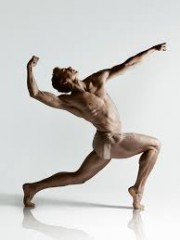
In 1978 the Australian Ballet brought László Seregi’s version of Spartacus to Australia based on his 1968 production for the Hungarian State Ballet. This famed production featured in three subsequent seasons up until 2002. The lead role of the gladiator/revolutionary hero Spartacus was taken on most famously by Steven Heathcote in 1990. His photo as Spartacus in leather straps and red cotton has become one of the most iconic images of Australian ballet. Now, 16 years later, the Australian Ballet has revived Spartacus in a brand new Australian production choreographed by Lucas Jervies with sets and costumes by Jérôme Kaplan. This production is sensational but it can’t replace memories of the legendary László Seregi production.
Khachaturian was on the outer with Stalin and the Soviet authorities in the late 1940’s when he was approached by choreographer Leonid Yakobson about composing a ballet based on the life and death of Spartacus, a popular revolutionary hero to the Soviets. Stalin died in 1952 and a year later Khachaturian completed his ballet score. The initial Kirov Ballet production of 1956 choreographed by Yakobson was a mild success but Yakobson pushed his modernist agenda too far eschewing pointe shoes and the production was not seen again. The first production by the Bolshoi Ballet choreographed by Igor Moiseyev brought popular acclaim, earning Khachaturian the Lenin Prize in 1959 for his score. The most famous version of Spartacus is the one choreographed by Yury Grigorovich for the Bolshoi Ballet in 1968 and still in their repertoire. It is this version that established the fame of Spartacus. Khachaturian’s stunning score found its perfect match in the athletic bravura style that came to exemplify the ballets of the Soviet era.
Spartacus by its very nature has always been a political ballet. While various productions in the West have tried to downplay its underlying message of the slave hero dying a valiant death in the fight against a cold unfeeling bourgeois elite, the politics are an integral part of the work itself. Lucas Jervies has retained the political nature of the ballet, cleverly subverting the original Soviet message so that the Romans now resemble the totalitarian regimes who once saw themselves embodied in Spartacus himself. Beginning with a massed red flag waving echoing Leni Riefenstahl’s famous film of the 1936 Olympics, Olympia, and the opening ceremony of the Moscow Olympics of 1980. There are frequent visual cues to totalitarian regimes throughout history. The marble coloured arches of the second act quote the arches of the Palazzo della Civiltà Italiana in Rome’s EUR, built for Mussolini in the late 1930’s.
Khachaturian’s score for Spartacus is one of the most epic of all ballet scores. Huge brass forces blast military fanfares and low strings and oboes lilt in the quieter, poignant, romantic moments. The score is alive with folk melodies and a frenetic energy. While it is a strikingly modern sound world, there is an abundance of thrilling melodies throughout the score from the intensely sensual to the ribald. The Opera Australia Orchestra was conducted by Nicolette Fraillon and played magnificently throughout the piece handling the rapid changes of pace and volume smoothly. Fraillon was equally able to whip the orchestra into an orgiastic frenzy one moment and then spin out a lush passionate line the next. Particular kudos goes to the brass section who played tremendously throughout the evening.
Leading a sensational cast of dancers was young soloist Marcus Morelli as Spartacus. Much younger and more lithe than those usually associated with the role, he made up for this with sparkling technique and excellent acting. This is Spartacus as a sensitive soul rather than a gladiator. When given the opportunity to open up into some expansive leaping and bravura dancing in his extended solo at the beginning of Act III, Morelli was able to show off his spectacular athleticism. As Spartacus’ wife, Flavia, Leanne Stojmenov danced beautifully with lyrical sensitivity, notable at the end of Act III, dancing with both pathos and defiance, showing off her wonderful acting chops and solid technique.
Adam Bull and Lana Jones were the leading Romans, consul Crassus and his debauched wife Tertulla. Both are spectacular dancers and were outstanding here. Jones’ dancing in Tertulla’s salacious Act II solo and pas-de-deux with Crassus were some of the highlights of the evening. Costumed in some spectacular gowns, Jones played the elegant villainess to the hilt. Bull played Crassus with cold malevolence. His acting performance perfectly balanced between Roman nobility and sly malice. His Crassus is an abuser who relishes dominating those in his power. Adam Bull underlies all his gesture with power and veiled brutality, showing that his Crassus is indeed an iron first in a velvet glove.
Among a sensational supporting cast, Lucien Xu and Natasha Kusen were wonderful as the patrician couple, Lucius and Eustacia. Steven Heathcote guest starred as the gladiator trainer Batiatus and Brett Chynoweth was thrilling as the fiery gladiator Crixus. There was not one weak link in the large ensemble. Cast from strength the whole way down to the corps de ballet, this was a fantastic night of dance theatre. The Australian Ballet again showed why it is continually ranked in the top ten ballet companies in the world.
Lucas Jervies’ choreography is excellent but it is marred by some directorial choices, such as the decision to eliminate swords and other weapons usually employed in the fight scenes, making all the fights and battles hand to hand combat. Unfortunately, much of the fight choreography feels unballetic and cumbersome as a result. There are some spectacular visual set-pieces, as in the start of Act I with the mass of choreographed red flag waving and the Roman nobility enjoying languid baths at the opening of Act II. Although both these pieces are stunningly inventive, they last too long and much of Khachaturian’s highly danceable score is wasted on these purely visual moments. The large sets of Acts I and II, though magnificent, reduce the area of the stage available for dance. While there are some wonderful choreographic sequences in Acts I & II, it is only when the stage opens up in Act III that we get the expansion of movement expected by a production of Spartacus.
The massive sets designed by Jérôme Kaplan are indeed magnificent and exude cool monumentality in marble grey. The splendid stadium of Act I, with its tiny warren of low cells for the gladiators, transforms magically from parade ground to gladiator school and into a fascist monument. Most spectacular of all is the set for Act II. Arches and marble bath tubs conjure the elegance of Crassus’s palatial villa. Kaplan’s design for the costumes are indeed beautiful evoking the styles of Ancient Rome with a contemporary vibe and fit excellently with the movement.
It is exhilarating to have Spartacus back on our stages after such a long gap and tickets are becoming scarce. With Khachaturian’s bombastic score and some stunning dancing from a sensational cast this is a theatrical event not to be missed.
Deen Hamaker for SoundsLikeSydney
Deen Hamaker is a passionate opera aficionado and commentator. Introduced to theatre, opera and classical music at a very young age, he has acted in and directed several theatre productions, both in Australia and overseas. Deen lived in Japan for several years and studied the performing arts of Asia. Deen’s particular passion is opera, particularly the Russian, French and Modern repertoire. Deen was a contributing author for “Great, Grand and Famous Opera Houses”, 2012. Fluent in Japanese, Deen holds a Bachelor of Arts in Japanese from Griffith University and currently lives in Sydney.
The Australian Ballet’s production of Spartacus continues at the Sydney Opera House until November 24.